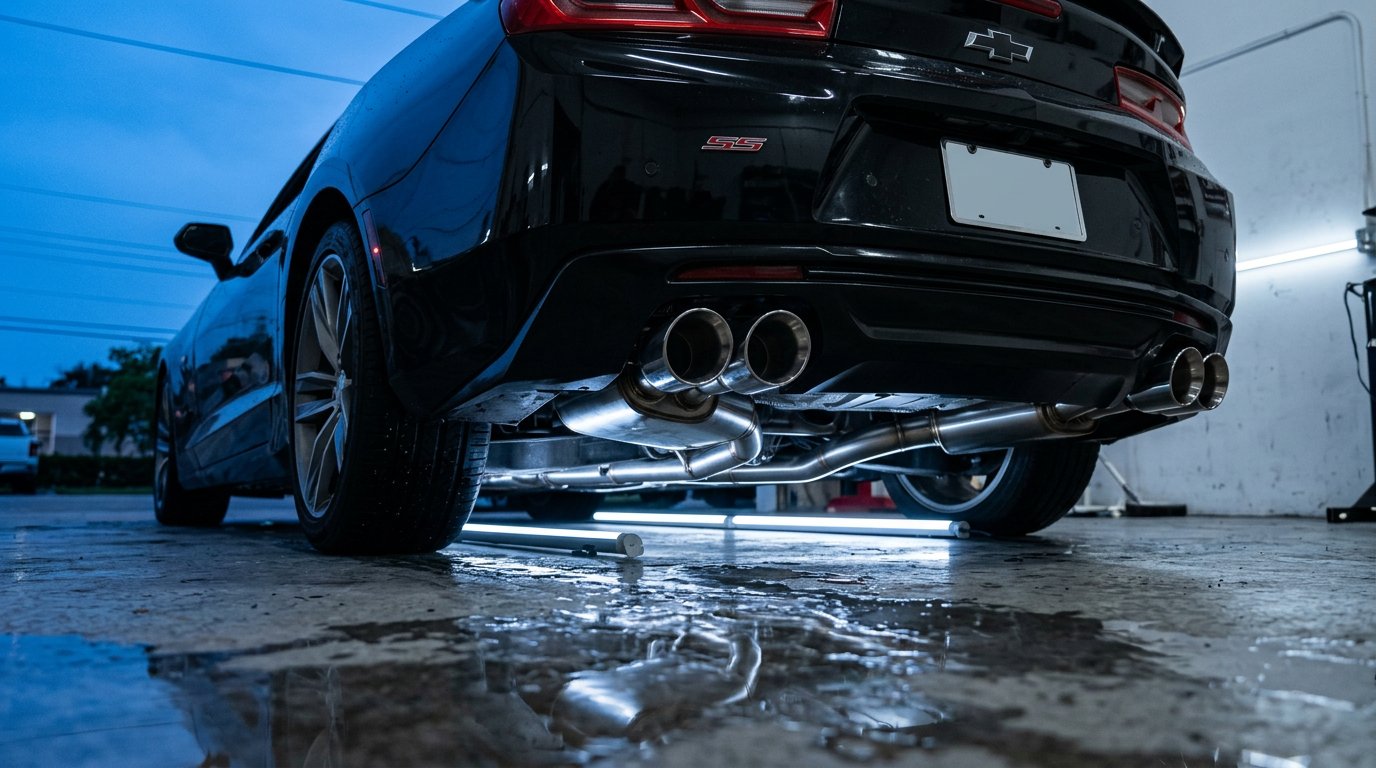
A Cat-back exhaust system is generally legal in the United States because it does not replace the catalytic converter, but local emissions and noise rules can still affect street use. The system must also match your vehicle: the wrong model year or configuration can cause fitment problems with routing, connections, or clearance.
An exhaust upgrade needs to suit the whole vehicle, not just its engine family. This guide explains how to check legality and fitment, compare Cat-back and axle-back coverage, and assess materials and construction without assuming one setup fits every application.
Start with your model year and exact vehicle configuration. Then compare the system’s coverage, pipe routing, muffler and tip layout, and emissions information. These details help narrow the vehicle-specific options and identify hardware that fits your goals and your vehicle’s requirements.
Key Takeaways
- Match the exhaust to your vehicle’s model year and configuration before choosing a system.
- Review routing, connection points, and clearance requirements to spot installation conflicts early.
- Compare the sections replaced by cat-back and axle-back systems to choose the right upgrade scope.
- Assess material and construction details alongside vehicle-specific options to narrow your selection.
Vehicle fitment verification
Start with your vehicle’s exact year, make, model, engine, and body configuration. A Ford Mustang and an F-150 require different exhaust applications, even when engine families overlap.
Vehicle-Specific Fitment
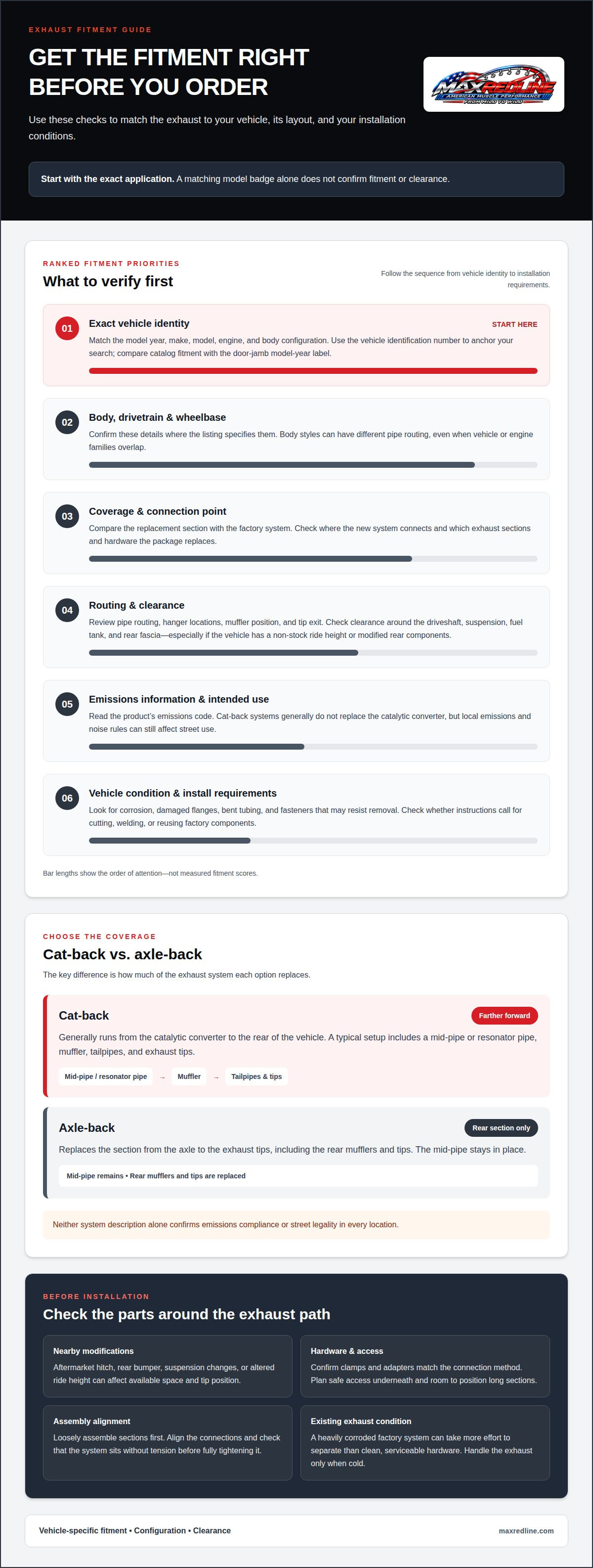
Use the vehicle identification number to anchor your search. Compare catalog fitment with the model-year label on the door jamb and the engine configuration. Confirm body style, drivetrain, and wheelbase when listings distinguish between them. A sedan and a coupe may have different pipe routing. Treat trim names as secondary unless the listing identifies them. Use the factory exhaust layout as your baseline rather than guessing from a different vehicle.
Installation Fitment
Compare the replacement section with the factory system before ordering. Check connection points, pipe routing, hanger locations, muffler position, and tip exit underneath the vehicle. Look for clearance around the driveshaft, suspension, fuel tank, and rear fascia. Pay special attention if the vehicle has a non-stock ride height or modified rear components. A matching model badge alone does not confirm clearance.
Use this sequence to narrow the application:
- Match the model year and engine listed for your vehicle.
- Confirm body style and drivetrain where specified.
- Compare the system’s connection point with the existing exhaust.
- Read the product’s emissions code for its stated use.
Emissions requirements can affect whether a configuration is suitable for street use in your area. Changing a vehicle’s exhaust from its EPA-certified setup can expose a repair shop to liability under the federal tampering prohibition, according to the United States Environmental Protection Agency. Treat emissions details as part of fitment, not an afterthought.
Installation checks before ordering
Plan the installation around the vehicle’s condition, not just the new parts. Inspect and handle the exhaust only when it is cold. Look for corrosion at joints, damaged flanges, bent tubing, and fasteners that may resist removal. Existing damage can change the work involved, even when the replacement matches the vehicle application.
Check for modifications that affect access or final positioning. An aftermarket hitch, rear bumper, suspension change, or altered ride height can reduce available space beneath the vehicle. Compare these parts with the replacement system’s layout and tip position. A system designed around factory hardware may need different clearance on a modified vehicle.
Before ordering, review the product’s installation requirements and hardware list. Check whether the instructions call for cutting, welding, or reusing factory components. These details affect the tools, workspace, and installation approach. Confirm that the listed clamps, adapters, and other parts match the connection method for your application.
- Inspect visible joints and fasteners for corrosion or damage.
- Note aftermarket parts near the exhaust path and rear exit.
- Read whether installation requires cutting, welding, or reused hardware.
- Plan safe access to the underside and room to position long sections.
During installation, loosely assemble the sections before tightening them fully. This leaves room to align connections and correct contact with nearby components. Confirm that the system sits without tension and the tips clear the rear fascia. Tighten the connections only after aligning the full assembly, following the instructions for that system.
Plan for removal as well as installation. A heavily corroded factory exhaust can take more effort to separate than clean, serviceable hardware. Inspect the existing system before committing to a do-it-yourself installation, since its condition can affect the work involved.
What is the difference between a Cat-Back and an Axle-Back exhaust system?
A cat-back exhaust system generally runs from the catalytic converter to the rear of the vehicle. An axle-back replaces only the rear section, from the axle to the exhaust tips, leaving the mid-pipe in place.
To plan an installation, identify the exact vehicle application and the work its exhaust layout requires. The system’s coverage and the condition of the existing exhaust both affect the installation plan.
Cat-Back Components
A typical cat-back setup includes a mid-pipe or resonator pipe, muffler, tailpipes, and exhaust tips. The exact layout depends on the vehicle’s engineering and factory routing. Compare the replacement system’s connection point with the existing exhaust, then identify which sections and hardware the package replaces. Stainless steel is one material option; construction and finish vary by system.
Cat-Back Function
A cat-back system replaces exhaust tubing and muffling components behind the catalytic converter. Its design can affect sound and flow through the section it replaces. It replaces more hardware than an axle-back, which focuses on the rear mufflers and tips. Neither description alone confirms emissions compliance or street legality in every location.
An axle-back is for a narrower change: it replaces the section from the axle to the tips, including the rear mufflers and tips, but leaves the mid-pipe in place. A cat-back reaches farther forward and includes the mid-pipe or resonator pipe. Compare the coverage before choosing a layout.
Cat-back systems generally do not replace the catalytic converter, but local emissions and noise rules vary. Review the chosen system’s emissions information and consider its sound for your intended use. Incompatible connections or poor alignment can also cause installation problems, so match the system to your vehicle’s configuration.
Cat-back exhaust systems by vehicle
Vehicle-specific options depend on the exact application. Max Redline carries the Stainless Works CTS-V cat-back exhaust, a confirmed example for a performance vehicle platform.
Vehicle-Specific Exhaust Options
Start with the CTS-V application, then match the product listing to your vehicle’s year and configuration. The product name identifies the platform but does not establish fitment for every CTS-V variant. Compare the listed application with your vehicle details before selecting the system. Keep your intended use and preferred sound character in mind as you narrow your choice.
Vehicle Platform Availability
Exhaust options vary by platform, and a system developed for one vehicle should not be assumed to fit another. The Stainless Works CTS-V system is a specific example, not a universal design. For another vehicle, search by make, model, and exact configuration. Treat product names as application clues, then use the listed fitment details to find the right match.
Use a focused selection sequence:
- Identify the vehicle’s make, model, year, and engine.
- Find an exhaust listing that names the matching platform.
- Compare the listing’s stated application with your vehicle details.
- Review system coverage and sound goals before choosing.
The CTS-V example shows why platform-specific naming matters. A performance exhaust may suit one application without fitting another model from the same manufacturer. Check each vehicle’s listing separately, rather than transferring fitment assumptions across platforms. This narrows your options without relying on appearance or brand alone.
Exhaust system materials and construction
Choose pipe diameter for the engine and build, not appearance alone. A 2.5-inch pipe is a typical size for naturally aspirated or lightly modified street cars. High-boost turbo setups or high-horsepower V8 builds typically step up to a 3-inch system. Treat these as application guidelines, then match the selected system to your vehicle.
Rely on the product’s stated specifications rather than assuming every component has the same construction. Check whether the description identifies pipe material, muffler material, and tip finish separately. Made-in-USA and Ohio-made product options are available in the performance parts category. Origin and material are separate considerations, so compare them independently when choosing a performance exhaust.
Muffler choice shapes the exhaust’s sound. Review the system description for its intended tone, then weigh that against your daily driving and noise requirements. The catalytic converter remains ahead of the cat-back section. Make sure the replacement’s connection point and routing suit your vehicle’s application.
- Use 2.5-inch pipe as a typical starting point for naturally aspirated or lightly modified street cars.
- Consider 3-inch pipe for high-boost turbo setups or high-horsepower V8 builds.
- Compare material specifications for pipes, mufflers, and tips separately.
- Match muffler sound character to your intended use and local noise rules.
Construction details include how each section connects and where the hangers attach. Review the layout and listed hardware against your vehicle before choosing a system. A larger diameter or more aggressive muffler is not automatically the right choice. Prioritize application, stated construction, and sound goals together. This gives you a clearer basis for comparing exhaust options without treating any one material or design as universally best.
Your next move is to match the exhaust choice to the vehicle’s wider build plan. A cat-back exhaust system can be one part of a larger performance setup, so think about how its sound, construction, and intended use align with your goals. Max Redline offers exhaust systems, Hemi Cam Kits, and tuning services for performance builds. Its team works with the parts it sells and tunes supported vehicles, bringing practical hardware and calibration experience to the discussion. Keep your vehicle configuration and intended changes in view as you narrow the options. That gives you a clearer starting point for selecting parts that work together, rather than choosing each component in isolation. For application-specific guidance on your next exhaust setup, contact Max Redline about fitment. Put the right hardware at the center of the build, then keep moving toward the performance you want.
Frequently Asked Questions
Is Cat-Back Exhaust Legal?
Generally, yes: a cat-back system that leaves the catalytic converter in place is typically considered street-usable, but emissions and noise rules vary by location. Read the product’s emissions code and check rules for your intended use. Federal tampering rules also matter: the United States Environmental Protection Agency says changing an EPA-certified exhaust setup can expose a repair shop to liability.
Will a Cat-Back system void my factory warranty?
Installing an exhaust does not automatically void the entire vehicle warranty. The Magnuson-Moss Warranty Act generally prevents a dealer from voiding coverage solely because you installed a cat-back, unless the dealer can show that the exhaust caused the problem. Keep installation records and document unrelated maintenance. A failure related to the modified exhaust may still affect that specific claim.
How much horsepower will I actually gain?
There isn’t one horsepower number for every vehicle. Naturally aspirated vehicles typically gain 5-10 HP; turbocharged vehicles may gain 10-20+ horsepower. Engine condition, existing exhaust restriction, and system design affect output. Compare those broad figures with your engine type and current setup before setting expectations. A dynamometer measurement before and after installation can show the change on your vehicle.
Will this make my daily driver unbearably loud on the highway?
Sound depends on the muffler and resonator design, as well as the vehicle’s engine and cabin acoustics. A loud cold start may sound different from steady highway cruising, when exhaust drone can become a concern. Look for sound descriptions and check whether the design retains resonators. An aggressive tip style alone does not indicate how loud the cabin will be.
Should I choose T-304 or T-409 stainless steel?
Choose T-304 when corrosion resistance is the priority, especially for a vehicle exposed to moisture or road salt. T-409 is a common exhaust-system stainless option and can develop surface discoloration while remaining functional. Compare material coverage across pipes and mufflers, not just the polished tip. Your climate and long-term appearance goals should guide the grade.
Can a new exhaust really improve my gas mileage?
Do not buy an exhaust expecting better gas mileage. A cat-back changes downstream exhaust hardware, but fuel economy still depends on engine calibration, driving conditions, and throttle use. A less restrictive system alone does not establish lower fuel consumption. To assess a change in your vehicle, track mileage on consistent routes and with consistent driving habits.