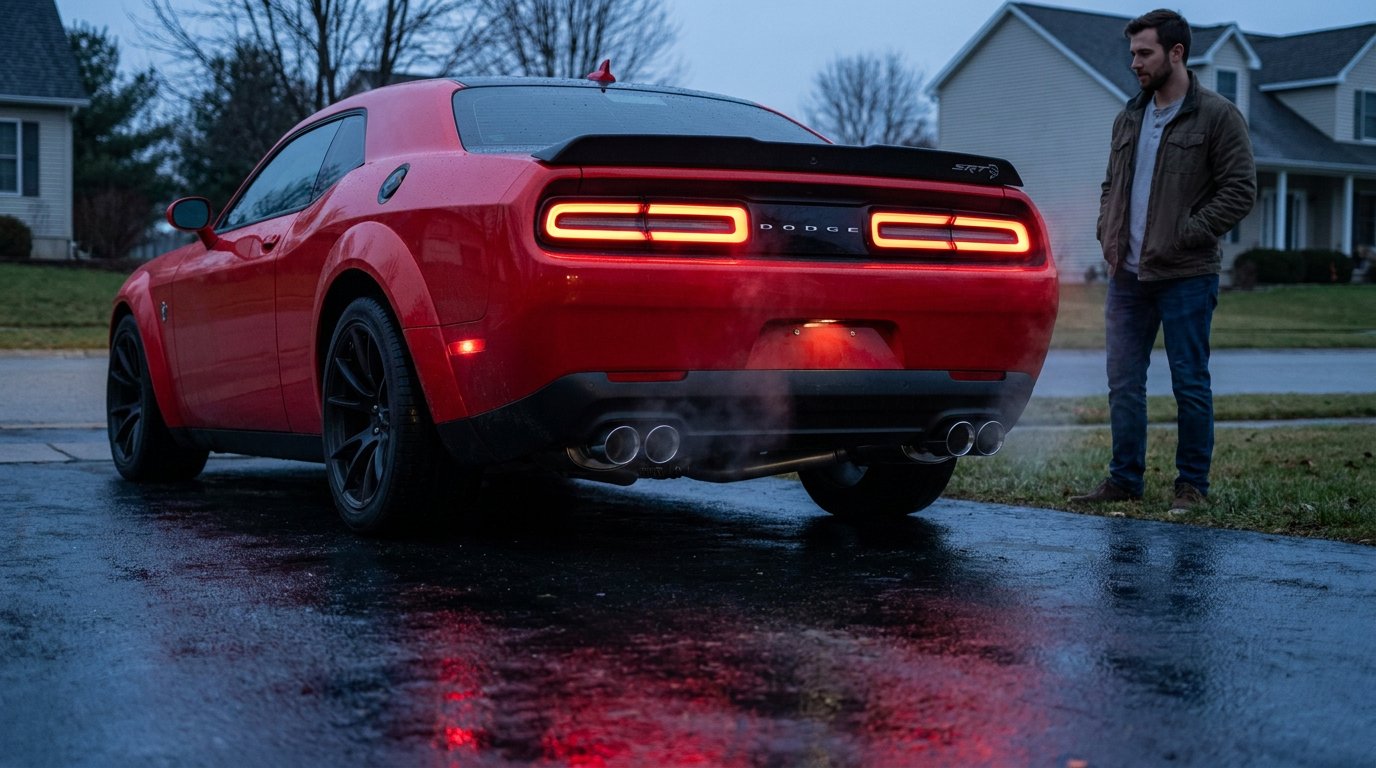
The loudest exhaust isn’t automatically the best upgrade. Choose an axle-back system to replace the rear exhaust components, or a cat-back system to replace the exhaust from the catalytic converter to the rear of the vehicle. A useful exhaust system buying guide starts with your goal: sound, exhaust flow, or a balance of both.
The right setup needs to suit your vehicle, not just sound good on paper. The system’s layout, pipe diameter, material, and fitment all affect how it works and how the finished setup feels on the road.
This guide breaks down the main exhaust configurations and the practical benefits of upgrading, then explains how to compare brand options by construction and application. You’ll also get a clear checklist for matching a system to your vehicle and planning installation, so you can narrow the choices before selecting hardware.
Key Takeaways
- Balance exhaust volume with cabin comfort: retaining a resonator can help keep drone down and produce a more subtle note.
- Compare systems by material, construction, and vehicle application, not brand name or sound alone.
- Match pipe diameter and connection points to the vehicle’s setup to avoid fitment issues or restrictions.
- Upgrading can improve exhaust flow, but the benefit depends on choosing hardware that suits the engine and the rest of the setup.
1. 8 Which Popular Brand Exhaust Systems Should I Choose?
Choose a system by vehicle application, construction, sound target, and warranty terms, not name recognition alone. For a daily driver, prioritize a resonated setup if cabin comfort matters. For a truck or performance vehicle, compare the system’s fitment and intended use with the engine configuration. Warranty coverage varies by manufacturer, so read the written terms, including coverage limits and exclusions, before choosing.
Material affects durability and long-term appearance. Aluminized steel is an affordable option for dry, mild climates, while T409 stainless steel offers a tougher choice for daily driving and can develop surface rust over time. T304 stainless steel provides stronger corrosion resistance for harsh climates. Factory exhaust systems commonly use mild steel, which is cheaper but less resilient. Compare tubing, muffler construction, welds, and finish across brands; those components matter alongside the exhaust tip’s appearance.
Sound depends on muffler design and resonator configuration. The muffler reduces engine noise, while a resonator can help reduce cabin drone and create a more subtle exhaust note. A non-resonated setup removes that sound-control component, so expect a more pronounced character. Match the choice to how you drive: a quiet commute calls for a different sound profile than a weekend performance car. Listen for the tone you want, not just maximum volume.
An aftermarket exhaust can improve engine performance by improving exhaust flow, but no fixed horsepower, torque, or fuel-economy gain applies to every vehicle. Engine design, system layout, and calibration shape the result. For most street-performance cars, 2.5-inch to 3-inch piping is identified as a sweet spot; oversized 4-inch piping can hurt low-end torque on some engine and turbo setups. Treat sound, power, and appearance as separate targets, then select a brand and diameter that serve the vehicle rather than chasing volume alone.
No single brand is best for every vehicle. Compare fitment, construction, sound, and intended use for your daily driver, truck, or performance vehicle. Choose a resonated system if cabin comfort matters, and review the manufacturer’s written warranty for coverage limits and exclusions.
2. 1 What Kind Of Exhaust System Should I Install?
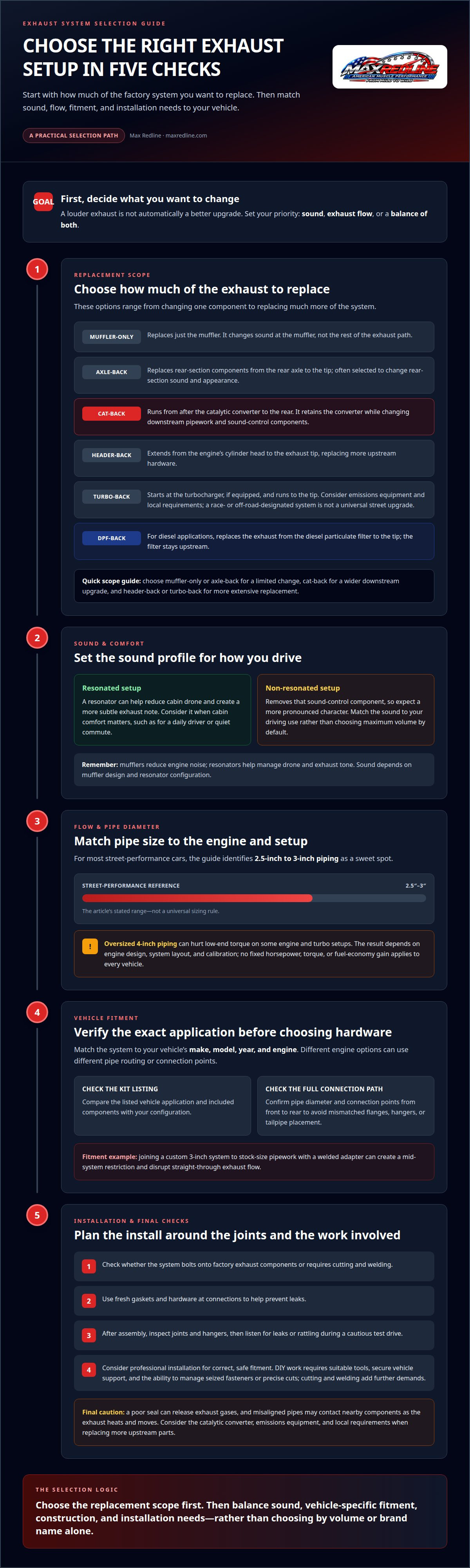
Choose by how much of the factory exhaust you want to replace. A cat-back starts after the catalytic converter and runs to the rear; an axle-back replaces components from the rear axle to the exhaust tip. Header-back systems run from the cylinder head, or the turbo if equipped, to the tip, while muffler-only swaps replace just the muffler. These are the main aftermarket options, ranging from a single component to nearly the full system.
A cat-back keeps the catalytic converter in place while changing the downstream pipework and sound-control components. It suits drivers seeking a broader exhaust change without replacing the converter. An axle-back is a narrower swap, often chosen to alter rear-section sound and appearance while leaving more factory components untouched. A muffler-only replacement is narrower still: it changes the sound at the muffler, not the rest of the exhaust path.
Header-back and turbo-back setups replace more hardware. A header-back begins at the engine’s cylinder head, while a turbo-back begins at the turbocharger; both extend to the exhaust tip. Replacing more upstream components can affect exhaust flow and emissions equipment, so consider the catalytic converter and local requirements. A turbo-back system designated for race or off-road use is not a universal street upgrade.
For diesel applications, a DPF-back system replaces the exhaust from the diesel particulate filter to the tip. The filter stays upstream while the downstream section changes. Compare system boundaries before choosing: a cat-back retains the converter, a DPF-back retains the particulate filter, and a full header-back reaches much farther forward. A resonator delete changes the sound-control layout, but doesn’t define how much pipe the kit replaces.
Start with your goal: choose axle-back or muffler-only for a limited rear-section change, cat-back for a wider downstream upgrade, and header-back or turbo-back for extensive replacement. Then match the kit to the vehicle and emissions equipment. For a vehicle-specific setup, compare performance exhaust systems against the configuration you want to run.
3. Fitment guarantees and installation considerations
Match the system to the vehicle’s exact make, model, year, and engine. A Mustang with a different engine option may use different pipe routing or connection points. Compare the kit’s listed application and included components with your vehicle configuration before purchase. This is the most reliable way to avoid mismatched flanges, hangers, or tailpipe placement.
Most performance exhaust systems bolt onto factory exhaust systems, but some applications require cutting and welding. Check the pipe diameter and connection points from front to rear. For example, a custom 3-inch system joined to stock-size pipework with a welded adapter can create a mid-system restriction and disrupt straight-through exhaust flow. Stainless construction affects material choice, not vehicle fitment.
Plan installation around the joints, not just the main pipes. Use fresh gaskets and hardware to help prevent leaks where sections connect. After assembly, inspect the joints and hangers, then listen for leaks or rattling during a cautious test drive. A poor seal can release exhaust gases, while misaligned pipes may contact nearby vehicle components as the exhaust heats and moves.
Professional installation is recommended to help ensure the system is fitted correctly and safely. DIY work requires suitable tools, secure vehicle support, and the ability to handle seized fasteners or make precise cuts. Cutting and welding add further demands. A bolt-on kit offers a more direct path, while a system needing fabrication requires additional installation work. Choose based on the kit’s design and the installer’s equipment.
In the United States, replacement cost depends on system coverage, material, and installation labor. A complete system costs more than replacing a single muffler or resonator, and labor depends on access, corrosion, and whether cutting or welding is needed. Compare the parts and labor scope for your exact vehicle and exhaust configuration rather than treating every replacement as the same job.
4. Benefits of upgrading an exhaust system
A well-matched exhaust upgrade can improve engine performance by improving exhaust flow. The benefit depends on the engine and system layout, not simply on a louder sound. A muffler change may alter the exhaust note without changing as much of the flow path as a broader system replacement. A useful exhaust system buying guide starts with a clear target: performance, sound, appearance, or a combination.
Sound is a direct, noticeable result. Different mufflers and resonator configurations can produce a deeper or more aggressive note, but more volume isn’t automatically better. A truck used for daily driving may need a restrained tone, while a weekend build may suit a sharper sound. Choose a note that works at cruising speed, not only during a throttle pull.
Material can change the ownership experience. Stainless steel resists rust and corrosion, making it a practical option where weather exposes exhaust components to moisture. Replacing aging factory parts can also refresh the finish around the tailpipe. Treat appearance as a supporting benefit: polished tips won’t compensate for a system that misses your engine’s performance needs.
Think about the whole combination. An exhaust upgrade alone doesn’t establish a specific horsepower, torque, or fuel-economy gain; engine design, exhaust flow, and calibration influence the result. A turbo-back or header-back change may call for an ECU tune, while an axle-back upgrade doesn’t require one. Use this exhaust system buying guide to consider whether tuning belongs in your build plan.
The clearest takeaway: buy for a defined outcome, then choose components that support it. If sound matters most, weigh muffler character against cabin comfort. If performance is the priority, consider the full flow path and how it fits the existing setup. Explore performance exhaust systems to find hardware suited to your vehicle and goals.
Max Redline: Exhaust systems
Max Redline offers exhaust systems for drivers choosing hardware to meet sound, fitment, and performance goals. Use the decisions in this guide to narrow down the system type and material that suit your vehicle, then consider how the exhaust works with the rest of your setup.
If your plan includes a turbo-back or header-back system, an ECU tune is recommended alongside the exhaust change. Max Redline also offers tuning services, cold air intakes, and Hemi Cam Kits for broader performance builds. Keep the project focused: match each component to the vehicle and the result you want, rather than adding parts without a clear purpose.
Contact Max Redline to discuss your exhaust setup.
Set Your Build Direction
Before choosing hardware, define what your exhaust needs to do. Decide whether your priority is a specific sound, improved flow, or a balanced street setup. Then note your vehicle’s configuration and any existing modifications. These details give you a clear basis for comparing options and avoiding parts that don’t match your build.
Use this exhaust system buying guide to turn your priorities into a focused parts decision. Keep the setup coherent: an exhaust change should support the engine, intended driving, and any planned tuning. If the build is still taking shape, settle your vehicle and performance goals first. A defined plan makes the next hardware choice more deliberate.
Bring your vehicle details and build goals to the next conversation. Contact Max Redline to discuss your exhaust direction. Make the choice that fits the car you drive and the performance you’re building toward.
Frequently Asked Questions
What kind of exhaust system should I install?
Choose a system that matches the change you want and the components already on your vehicle. For a stock commuter seeking a different tone without disturbing upstream hardware, choose a limited rear-section upgrade. If you’re planning engine modifications, assess the full combination before buying. Include intended use, existing modifications, and how much factory hardware you want to retain in your decision.
Which popular brand exhaust systems should I choose?
There’s no single best brand for every daily driver, truck, or performance build. Compare systems listed for your exact vehicle configuration, then review the manufacturer’s written warranty for coverage, exclusions, and claim requirements. For a truck used for towing, prioritize an application suited to its engine and driving demands. For a performance vehicle, compare the system’s intended use and supporting fitment details.
Why upgrade your exhaust?
Upgrade when the current system no longer supports your build goals or preferred driving character. A modified engine may need an exhaust setup selected as part of the broader combination, while an enthusiast may prioritize a different sound or appearance. Define your main reason first. That gives you a practical way to judge whether a component change fits the vehicle’s purpose.
What is the difference between aftermarket and factory exhaust systems?
A factory system is designed for the vehicle’s original configuration, packaging, and sound target. Aftermarket systems offer different layouts and construction choices for owners changing a vehicle’s sound or performance setup. That flexibility makes exact application important: compare the replacement system with the vehicle’s engine and existing hardware. A different layout isn’t automatically a better match for every build.
Does a bigger exhaust give more power?
No. A larger pipe doesn’t guarantee more power, because the right diameter depends on the engine, airflow demands, and operating range. An oversized system can reduce low-end torque on some combinations. Choose pipe sizing around the vehicle’s setup rather than assuming maximum diameter is best. For a turbocharged engine, account for the turbo and the rest of the exhaust path.
Why choose aftermarket exhaust components?
Aftermarket components let you target a specific part of the system instead of replacing everything. For example, a driver focused on appearance or rear-section sound can choose a narrower change, while a larger build may call for a more complete configuration. Compare the part’s vehicle application and how it works with retained components. Choose each piece to serve a clear build objective.