Engine calibration for performance mods adjusts fuel delivery, ignition timing, and other engine settings to suit changed airflow and hardware. A well-matched calibration supports power and drivability while reducing the risk of problems caused by unsuitable settings.
An intake, exhaust, fuel-system change, or forced-induction setup can alter what the engine needs from its control system. The goal is to match calibration to your vehicle’s parts and how you drive, not simply chase the biggest dyno number.
This article explains how calibration affects fuel, timing, drivability, and power, how tuners use testing and datalogs to assess changes, and what signs and risks to consider before choosing ECU tuning.
Key Takeaways
- Match fuel delivery and ignition timing to the engine’s airflow changes and installed hardware.
- Use dyno testing and datalogs to assess calibration changes under measured operating conditions.
- Evaluate throttle response and power delivery alongside peak output to judge how the vehicle drives.
- Recognize that overly aggressive or mismatched ECU tuning can make an engine run hot and contribute to component failure.
How engine calibration affects fuel delivery and ignition timing
Engine calibration adjusts control settings to match airflow and fueling changes from performance modifications. On a modified Miata or turbocharged engine, those settings can affect torque, throttle response, and fuel use.
Calibration After Vehicle Modifications
Calibration updates engine settings to account for changes in intake airflow, exhaust flow, or fuel delivery. The factory setup was designed for the original hardware, which may differ from the parts now moving air and fuel through your engine.
A cold air intake or exhaust system can change airflow; different fuel injectors can change fuel delivery. Revised settings may help the engine control system respond to the vehicle’s current configuration. The calibration plan depends on the specific modifications and their effects, not just the part category.
Fuel Mixture, Ignition Timing, and Boost
Calibration can adjust the air-fuel mixture, ignition timing, and, on a turbocharged engine, boost pressure. Fuel delivery needs to match the air entering the cylinders, while ignition timing determines when the spark occurs during combustion. Boost settings also need to suit the engine and its supporting hardware.
These adjustments work together. Changing fuel delivery without accounting for airflow can create an unsuitable mixture, while timing changes can affect the engine’s response under load. A tuner should base a vehicle-specific calibration on its hardware and assess results through testing and datalogs, rather than rely on a generic file alone. Are performance ECU tunes legal under U.S. emissions and state inspection rules? There is no blanket answer. Legality depends on the vehicle, calibration, emissions configuration, and applicable rules.
Performance, Efficiency, and Operating Costs
A well-matched calibration can improve power delivery, throttle response, or torque after modifications. Fuel efficiency may also improve when settings suit the vehicle’s operating conditions, though performance-focused changes can increase fuel consumption. Results depend on the hardware, calibration choices, fuel, and driving habits.
Fuel use is the clearest day-to-day factor affecting operating costs. Before work begins, ask how changes will be evaluated and results documented.
Testing and logging during tuning
Testing shows whether calibration changes work beyond the programming screen. Tuners combine vehicle data, dynamometer results, and road behavior to assess each revision.
Post-Calibration Vehicle Checks
Post-calibration checks assess whether the vehicle responds properly after revised settings are applied. They matter because a calibration file must work in operation, not just look correct in software.
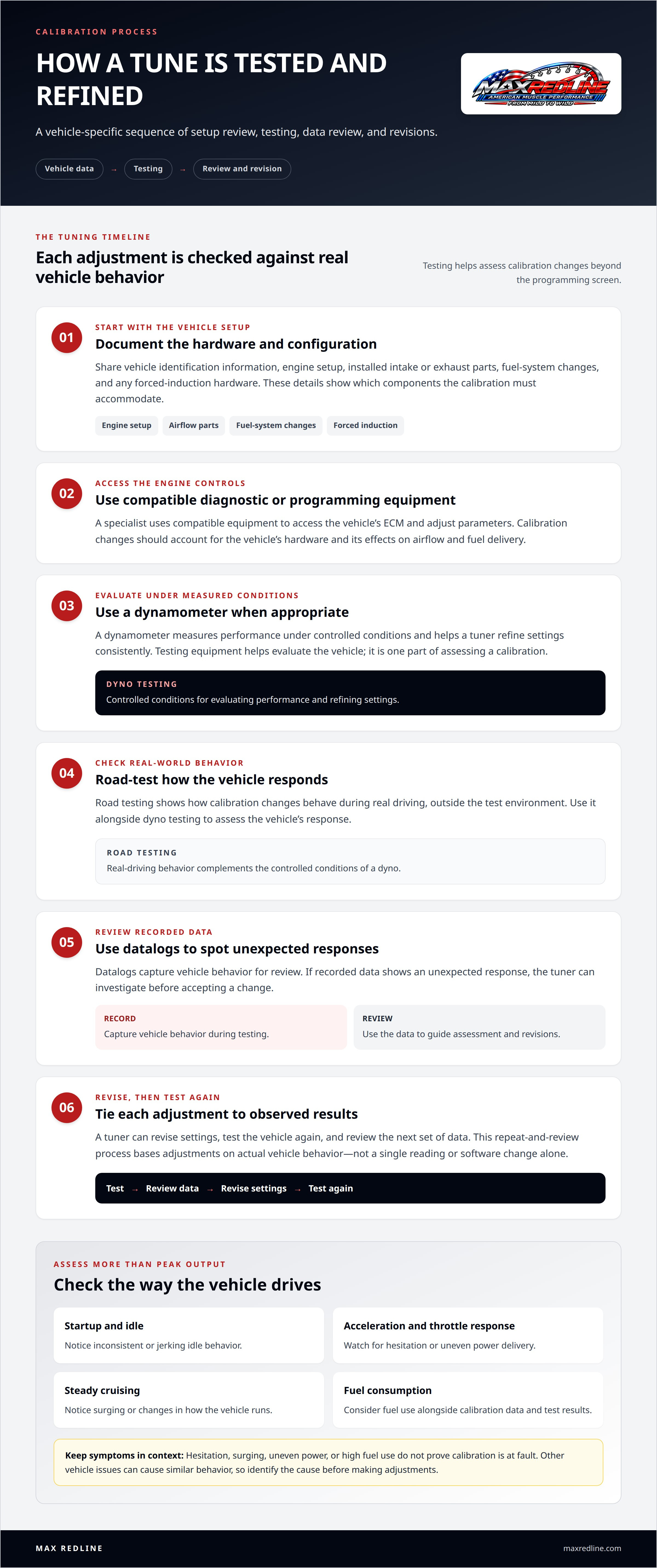
A tuner can review datalogs, revise settings, and test the vehicle again. If recorded data shows an unexpected response, the tuner can investigate before accepting the change. This repeat-and-review process ties each adjustment to the vehicle’s actual behavior instead of relying on a single reading.
On-Road and Dynamometer Testing
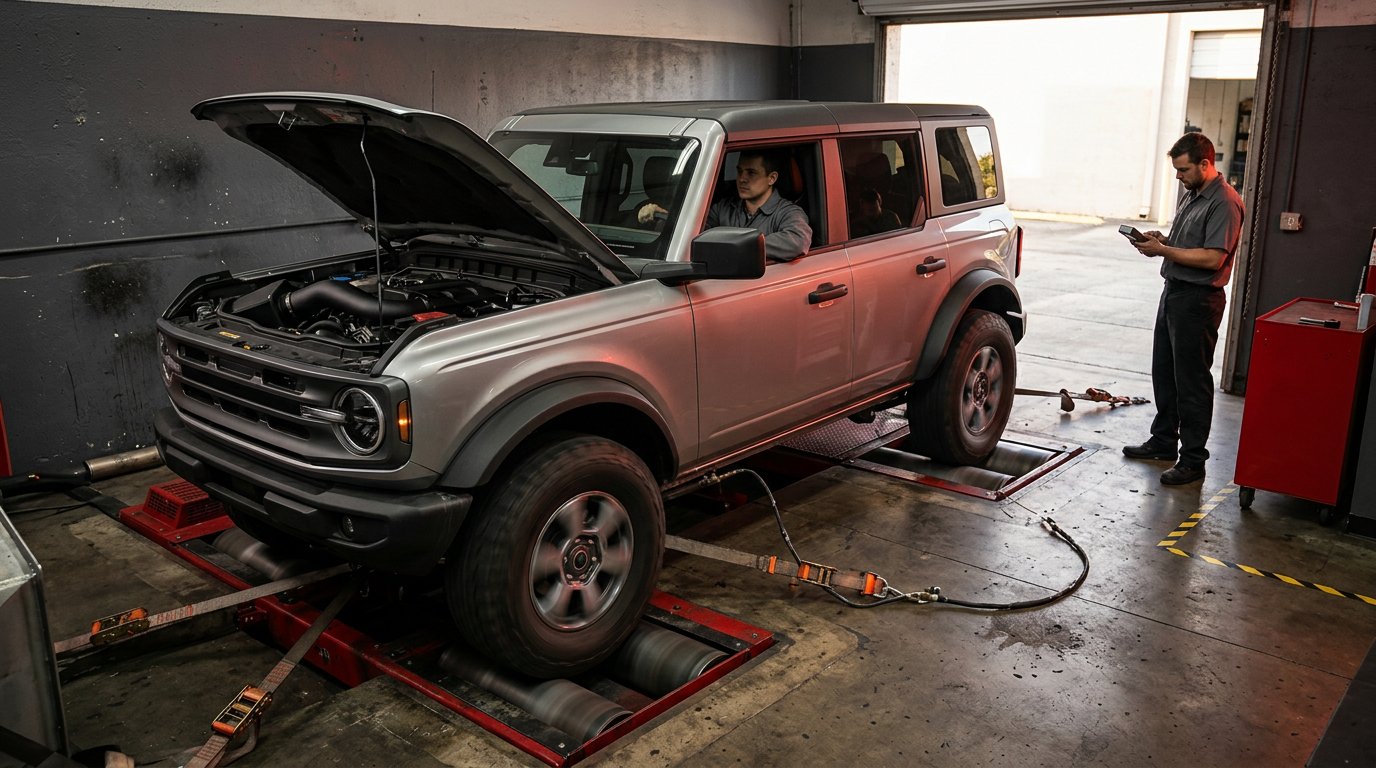
Dynamometer testing measures performance under controlled conditions, while road testing shows how calibration changes behave during real driving. Both are useful: a dyno helps technicians refine settings consistently, and road testing reveals how the vehicle responds outside the test environment.
Dyno tuning and an off-the-shelf ECU tune differ in how closely testing reflects your vehicle. A dyno session lets the tuner evaluate that vehicle’s results; an off-the-shelf tune uses a preset calibration rather than the same individual testing process. Datalogs and revisions can help assess changes between tests and refine the final calibration.
Information and Tools a Professional Needs to Calibrate an Engine Safely
A professional needs the vehicle’s configuration and modification details to assess calibration. Provide the vehicle identification information, engine setup, installed intake or exhaust parts, fuel-system changes, and any forced-induction hardware. These details show which mechanical components the calibration must accommodate.
For calibration work, specialists use compatible diagnostic or programming equipment to access the vehicle’s ECM and adjust parameters. Testing equipment, including a dynamometer where appropriate, helps evaluate performance; datalogs capture vehicle behavior for review. The tuner uses those records to guide revisions and test applied settings, rather than treating one software change as proof of success.
Drivability, throttle response, and power delivery
A useful calibration should make the vehicle respond appropriately in everyday driving, not just produce a strong dyno result. After an intake, exhaust, or fuel-system change, compare engine behavior during startup, idle, acceleration, and steady cruising. Slow throttle response or uneven power can point to a mismatch between the hardware and control settings.
Notice when behavior changes. A Miata that hesitates when you press the accelerator, surges at a steady speed, or delivers power unevenly may need assessment. An inconsistent or jerking idle can also signal a concern. These symptoms don’t prove calibration is at fault; other vehicle issues can cause similar behavior, so identify the cause before making adjustments.
Calibration can target responsive throttle and smoother power delivery instead of peak horsepower alone. For example, a tuner can assess whether a modified vehicle responds cleanly as engine load changes, then evaluate the calibration against that goal. The right result depends on engine condition, existing hardware, fuel quality, and the calibration plan. A dyno figure alone doesn’t describe the full driving experience.
Fuel consumption is another practical measure. Unusually high fuel use after a modification may mean the vehicle’s settings or operating behavior deserve attention, but it doesn’t prove there is a tuning problem. A professional can review behavior alongside calibration data and test results. That context helps distinguish a drivability concern from an expected change in how the modified engine delivers power.
Define your goals before evaluating results. For street driving, prioritize a consistent idle, predictable throttle response, and smooth power delivery in normal conditions. For performance use, consider how the engine responds under load. These goals give the tuner a clear basis for assessing whether calibration suits your modifications and intended driving, instead of judging success by a single peak-output number.
Risks of improper ECU tuning
An unsuitable or overly aggressive ECU tune can make an engine run hot and contribute to component failure. Risk increases when calibration settings don’t match the installed hardware or operating demands. A tune developed for a different intake or fuel setup, for example, may not suit your vehicle. More power on a dyno chart doesn’t prove the engine is operating appropriately.
Excessive engine speed can cause unnecessary wear, while mismatched calibration can affect engine operation under load. Proper calibration can help prevent engine knocking, overheating, and inefficient fuel consumption, but a tune cannot correct every mechanical problem. A professional needs to assess the engine’s condition and modifications before deciding which control settings are appropriate.
Pay attention to changes after a calibration update. New overheating, unusual engine behavior, or a warning light warrants prompt evaluation, not another power-focused adjustment. These signs can have several causes, so diagnosing the vehicle matters. Driving hard while an engine runs hot can increase the risk of component damage.
Calibration quality depends on matching software changes to the vehicle and evaluating how it operates. A professional can review the parts and fuel setup, examine datalogs, and test revisions. If a problem appears after an update, those records help connect engine behavior with the changes made. Don’t treat one peak-power result as proof that every operating condition is covered.
A sound tuning goal balances output with controlled engine operation. Consider the vehicle’s hardware, how it will be driven, and whether calibration behaves consistently during testing. Excessive engine speed and unnecessary wear can shorten component life; added power is of little use if the engine can’t support how it’s being operated. Resolve abnormal behavior before requesting more aggressive settings.
Max Redline: Performance Parts
Max Redline pairs performance parts with tuning services. If an intake or exhaust changes engine airflow, matching those parts with an appropriate calibration can help keep the setup cohesive.
Choose an exhaust system or Hemi Cam Kit to support your build, then consider how the hardware affects engine operation. Max Redline also provides tuning services for supported vehicles, so you can address calibration alongside performance modifications. Fitment and the parts already installed shape the right approach for your application.
Contact Max Redline to discuss performance parts or tuning for your vehicle.
Plan the Next Upgrade Around the Whole Setup
Plan each modification around your vehicle’s full configuration and intended use. The engine, fuel system, intake, exhaust, and driving goals all shape the build. Treat engine calibration for performance mods as part of that plan, not a last-minute correction after installation.
Before choosing your next step, organize the vehicle and model year, current modifications, fuel type, and intended use. Max Redline provides remote and in-shop custom tuning to support application-specific build decisions.
Set a clear target, then make each change serve the way you want the vehicle to run. Contact Max Redline about your setup to discuss a practical next step for your build.
Frequently Asked Questions
What Are the Benefits?
Calibration can tailor engine control to your intended use, whether you prioritize street manners, track response, or another driving goal. That target helps define what the tuner evaluates beyond peak output. A stock Miata running efficiently doesn’t need regular engine tuning; a meaningful hardware change or specific operating concern gives a professional a practical reason to assess it.
What Is the Calibration Process?
Start with accurate vehicle and controller information. For a PCM or module service, provide the vehicle year, engine, vehicle identification number, and controller part number. Describe the installed modifications and fuel in use as well. These details help identify the application and service scope. Unlocking, programming, replacement hardware, and custom calibration are distinct services, not interchangeable.
What is Tuning?
Tuning adapts engine-control settings to a specific vehicle application. The work may be handled remotely or in-shop, depending on the supported vehicle and service. For remote work, Max Redline uses datalogs and revisions, allowing the tuner to review information from your vehicle and adjust the calibration file as the project develops.
What is engine calibration or ECU tuning for performance modifications?
Calibration is a software-level configuration for a modified engine, not a physical part replacement. Hardware changes what is installed; calibration determines how engine controls respond to that configuration. A calibration file is vehicle-specific, so the exact application and installed components help establish whether it suits your setup.
Which performance mods require a custom ECU tune?
No single part name determines whether calibration is needed. The key question is whether a modification changes airflow, fueling, or engine operation enough to call for revised control settings. Significant engine changes and forced induction deserve particular attention. A professional considers the full combination, including supporting hardware and fuel, rather than assuming every vehicle with the same upgrade needs identical calibration.
What Steps Does a Professional Take to Dyno Tune an Engine After Performance Mods?
A professional evaluates the vehicle and its installed combination on a dynamometer, then reviews vehicle data alongside measured output. A dyno can report wheel horsepower and torque, helping assess power at the wheels rather than relying on an engine-output claim. The tuner uses the application’s response and recorded data to guide calibration decisions, then evaluates the modified setup.