
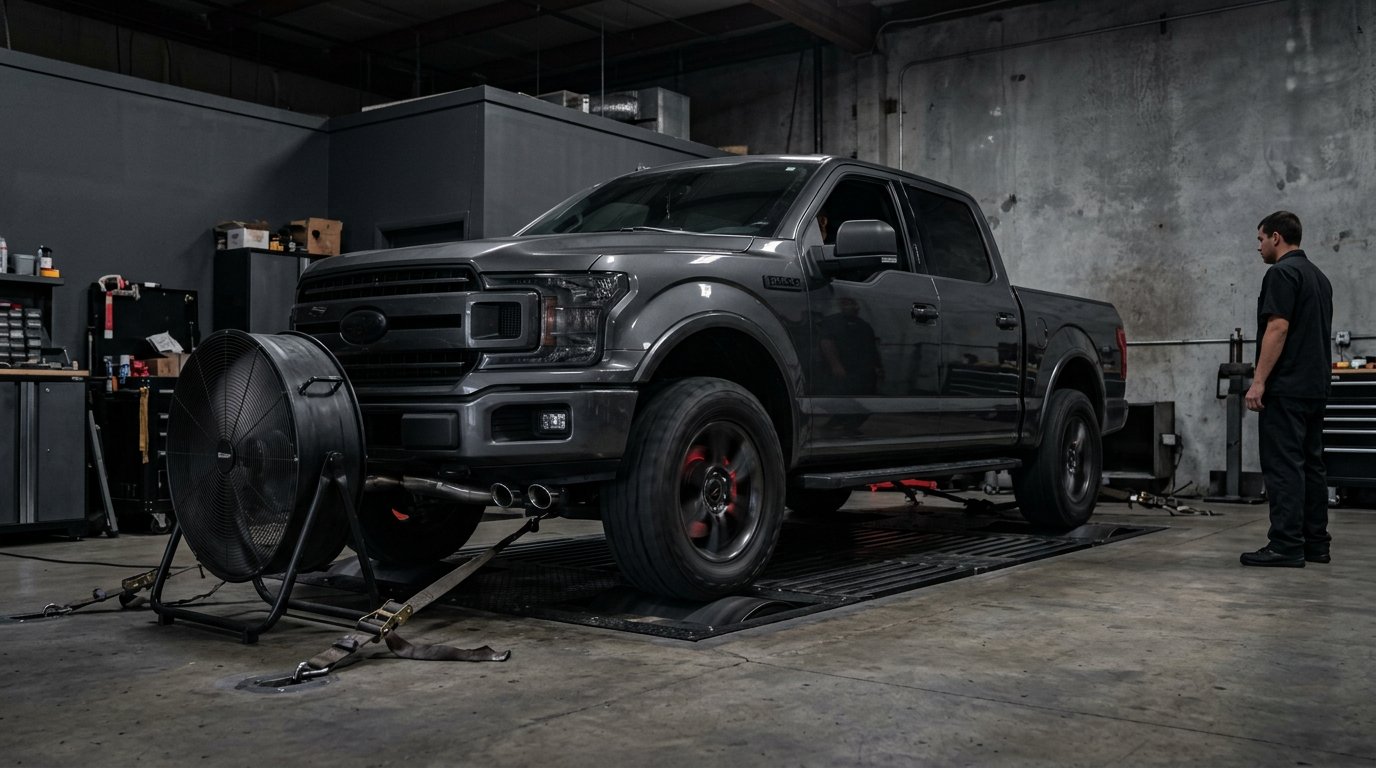
A well-matched cat-back exhaust typically adds 5 to 15 horsepower, but exhaust upgrade horsepower gains vary with the engine, pipe sizing, and the rest of the setup. On most everyday cars and trucks, an exhaust-only change delivers a modest increase; an oversized system can also soften low-speed response instead of improving it.
When weighing exhaust upgrade horsepower, look beyond sound. Gains depend on how effectively the system moves exhaust gas while preserving the flow characteristics your engine needs.
This guide explains how exhaust flow affects power, what to expect from a cat-back system, and how a cold air intake and custom tuning can complement exhaust changes. Learn why vehicle configuration matters, when tuning may be part of the plan, and why louder sound or larger pipes alone do not guarantee more horsepower.
Key Takeaways
- A well-matched cat-back exhaust typically adds 5 to 15 horsepower, while gains vary with the vehicle and its existing setup.
- Pipe sizing and exhaust flow matter; an oversized system can weaken low-speed response instead of improving performance.
- Pairing exhaust changes with a cold air intake and custom tuning can produce stronger gains than exhaust hardware alone.
- Headers, downpipes, and other exhaust components affect engines differently, so match the upgrade to your vehicle configuration.
Does Upgrading an Exhaust Increase Horsepower?
Yes, an exhaust upgrade can increase engine output, but gains depend on the component and vehicle setup. Estimates vary from a few horsepower to more than 30 horsepower for certain components.
Gains by Exhaust Component
Expected horsepower gains vary with the exhaust component, engine type, and how well the parts work together. A muffler change affects a different section of the system than a header installation, so the two are not directly comparable.
- A muffler upgrade typically adds 3 to 5 horsepower.
- An axle-back exhaust typically adds 3 to 10 horsepower.
- Header installation typically adds 10 to 30+ horsepower.
- On naturally aspirated cars, modifying only the downpipe typically adds 3 to 8 horsepower. On turbocharged cars with significantly restrictive original downpipes and front sections, a properly matched upgrade commonly adds 5 to 15 horsepower.
Across exhaust upgrades generally, estimates range from 5 to 40 extra horsepower. Most everyday cars and trucks see modest gains from exhaust hardware alone. Large claimed gains may reflect several modifications rather than the exhaust component by itself.
Comparing Dyno Results
A dyno comparison measures wheel horsepower and torque before and after an exhaust change. To isolate the effect, compare runs using the same vehicle, calibration, and other hardware. The result applies to that specific setup, not necessarily to another engine.
Review the full power curve, not just peak output. A higher peak can coincide with lower output at other engine speeds. Compare torque and horsepower across the operating range to see whether the change suits the vehicle’s intended use.
Turbocharged engines may benefit from improved flow through a restrictive downpipe, while naturally aspirated engines rely more on an exhaust system matched to their characteristics. Basic cat-back and axle-back upgrades generally work with the factory tune. Other modifications that increase airflow may require ECU adjustments to account for fueling needs.
An incorrectly modified exhaust component can reduce output by 1 to 40 horsepower or more. Proper component sizing and ECU adjustments, when needed, help keep the exhaust configuration aligned with engine operation.
Combining exhaust upgrades with intake and tuning
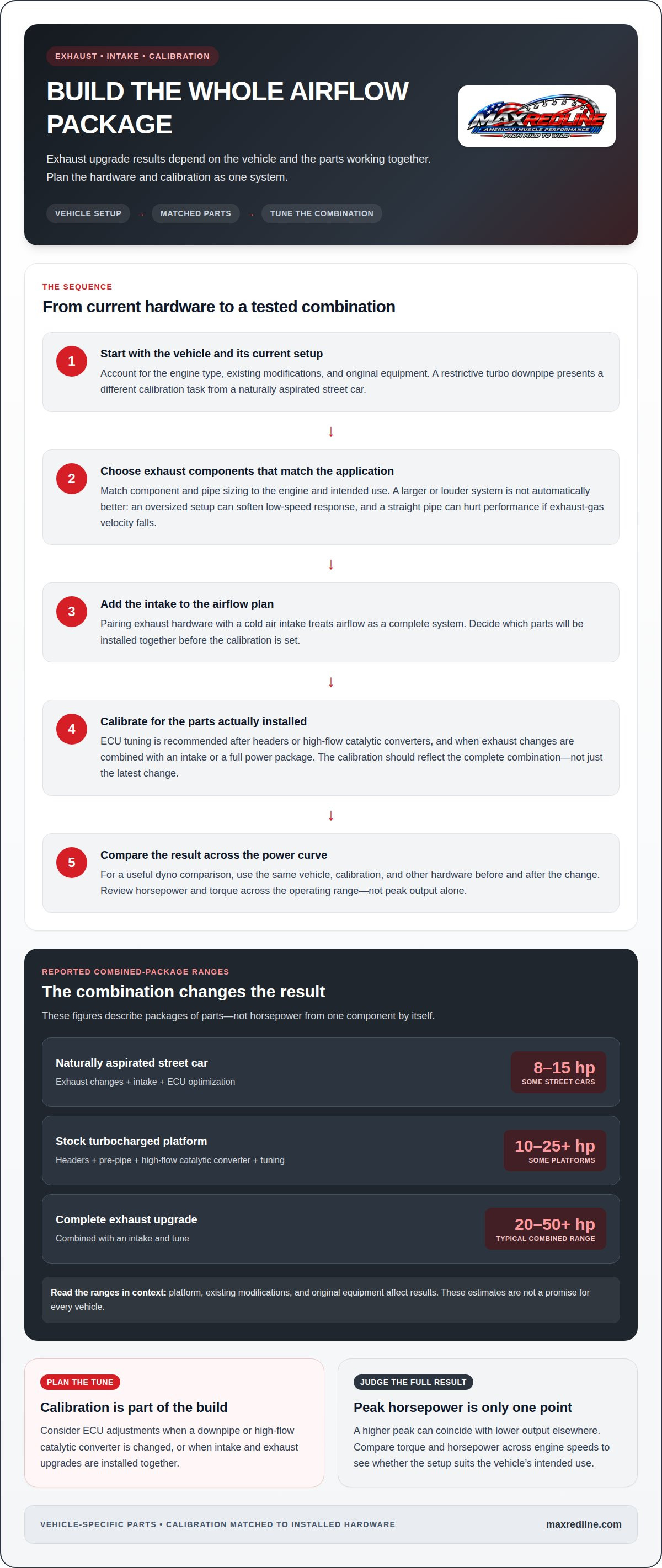
Pairing exhaust hardware with a cold air intake and ECU tuning treats the engine as a complete airflow system. The calibration should reflect all the parts installed together, not just the latest change.
A complete exhaust upgrade combined with an intake and tune typically adds 20 to 50+ horsepower. Some naturally aspirated street cars may gain 8 to 15 horsepower with exhaust changes, intake, and ECU optimization. On some stock turbocharged platforms, headers, a pre-pipe, and a high-flow catalytic converter with tuning can add 10 to 25 horsepower or more. These ranges describe combined packages, not a single part.
Use those figures as broad context when estimating exhaust upgrade horsepower. The platform, existing modifications, and original equipment all affect the result. A turbocharged vehicle with a restrictive downpipe, for example, presents a different calibration task from a naturally aspirated street car. The tune must account for the actual combination, since engines do not all respond alike.
ECU tuning is recommended after installing headers or high-flow catalytic converters. It is also recommended when exhaust changes are combined with a cold air intake or a full power package. Tuning is worthwhile when modifying a downpipe or high-flow catalytic converter, or when upgrading the intake and exhaust together. These changes make calibration part of the build plan, not an afterthought.
Coordinate the intake, exhaust, and calibration around how you intend to use the vehicle. A street-driven car may prioritize usable response across its operating range, while a performance build may target output at higher engine speeds. Custom tuning can account for the parts actually installed.
Define the current hardware, choose compatible components, and plan the tune around that final configuration. This makes it easier to assess the exhaust upgrade horsepower potential of the whole package. Explore custom tuning services when your parts combination calls for a vehicle-specific calibration.
How exhaust upgrades can improve flow and reduce backpressure
Exhaust components guide gases from the engine to the tailpipe. Their design affects flow, sound, and how the engine delivers power.
Exhaust Flow and Backpressure
Backpressure is resistance exhaust gases encounter as they move through the system. Headers replace a manifold and can increase the area available for exhaust flow. Smoother bends and correctly sized tubing can also help the engine expel gases. These design choices matter because a restrictive path can limit how effectively the engine clears exhaust.
A straight-pipe system is not automatically a performance upgrade. It may increase noise while hurting performance if it reduces exhaust-gas velocity. The muffler and remaining components still affect how the system works as a whole.
Factors Behind Horsepower Gains
Engine design, displacement, pipe size, bends, and vehicle use all affect exhaust performance. Mandrel-bent tubing maintains a consistent diameter through curves, helping avoid restrictions at bends. The right pipe size depends on the engine and how you use the vehicle, so a setup suited to one application may not suit another.
Replacing a manifold with headers changes the area available for gas flow. Pairing that change with suitable tubing matters more than choosing components by appearance alone. A professional can assess the engine and system layout to select parts that work together.
Effects on Torque and Driving Response
Exhaust flow can affect how power is delivered across engine speeds. Throttle response and torque depend on the engine’s characteristics and exhaust configuration, so assess the full operating range rather than sound alone. A system designed for one use may feel different in another application.
Fuel economy also depends on how the vehicle is driven and on engine calibration. An exhaust change alone does not establish a specific mileage improvement. Consider the engine, intended use, muffler, and complete pipe layout together when weighing performance and everyday drivability.
Cat-back exhaust upgrades
A cat-back exhaust replaces components downstream of the catalytic converter, extending through the rear exhaust section. It is a broader change than a muffler-only or axle-back upgrade, while leaving the catalytic converter in place. For a street car, consider whether the replacement system suits the engine and its existing configuration.
Published gain estimates vary by vehicle and system. A cat-back exhaust typically adds 5 to 15 horsepower, while replacing the cat-back section on most stock naturally aspirated cars typically adds 2 to 6 horsepower when the product and specifications are suitable. The smaller range is a more relevant expectation for a stock naturally aspirated street car. Turbocharged applications and modified engines can respond differently.
Pipe diameter, bends, muffler design, and the engine’s airflow needs all shape the result. A larger pipe does not automatically create more power; an oversized system can reduce exhaust-gas velocity and weaken low-speed response. Match the system to the vehicle instead of choosing by sound or diameter alone. Account for existing headers, intake changes, and calibration too, since they affect the overall setup.
Basic cat-back upgrades generally work with the factory tune and do not require ECU adjustments. This can make a cat-back a practical choice when you want a moderate change without altering engine calibration. Tuning may become relevant if the cat-back is part of a larger combination that includes headers, a high-flow catalytic converter, or intake changes.
Plan for typical installation time of 1 to 3 hours. Fitment, the vehicle’s existing exhaust layout, and the selected system determine how directly the replacement connects. The takeaway: expect modest gains on a stock naturally aspirated car, and prioritize vehicle-specific fitment, suitable pipe sizing, and the complete combination over a headline horsepower claim.
Max Redline: Exhaust systems
Max Redline is a natural next step when selecting exhaust hardware for a horsepower-focused build. Consider its exhaust systems in relation to your engine configuration and existing modifications, rather than choosing by sound alone.
If your setup also changes intake airflow, Max Redline offers cold air intakes and tuning services to support a coordinated parts combination. These options can be useful when exhaust changes are part of a broader engine upgrade and calibration needs to match the installed hardware.
Contact Max Redline to discuss exhaust systems for your performance goals.
Plan Your Next Power Step
Set your exhaust upgrade horsepower target around the vehicle you have, not a headline number from a different build. Let your engine, current modifications, and desired driving response guide the parts combination. This keeps the next change focused on usable performance, not sound alone.
For a broader build, Max Redline offers exhaust systems, Hemi Cam Kits, and tuning services. Consider how those options fit your vehicle’s configuration and power goals. A camshaft or other engine change can alter what the exhaust system needs to support, so plan the combination as a whole.
Bring your vehicle details and current hardware into the discussion. That gives the team a clearer basis for helping you choose a direction that fits your setup. Contact Max Redline about exhaust upgrades and take the next step toward a better-matched build.
Frequently Asked Questions
How Much Horsepower Can You Expect to Gain?
It depends on the component, engine, and vehicle setup. A muffler upgrade typically adds 3 to 5 horsepower, while a cat-back system typically adds 5 to 15 horsepower. Treat these as broad estimates, not a prediction for your specific vehicle. A stock naturally aspirated car may gain less than a modified setup with complementary intake and tuning changes.
What Should You Know About Exhaust Upgrades Regarding Local Regulations?
Before installing an exhaust system, check applicable state and local requirements for your vehicle and intended use. Keep required emissions components in place, and verify that the system is compatible with your vehicle’s emissions configuration. Component type and emissions configuration matter, so do not assume every exhaust modification follows the same rules.
Does Louder Always Mean Faster?
No. Sound level does not show whether an exhaust system increases engine output. A straight-pipe setup can be loud while reducing performance if it lowers exhaust-gas velocity. For example, an oversized pipe on a small-displacement, naturally aspirated engine can weaken low-end torque. Judge a system by how well it matches the engine and by measured performance, not volume alone.
How can a professional at Max Redline help you choose a well-matched solution for real performance gains?
Assess your engine, current modifications, and intended use before deciding which exhaust section to change. This helps avoid buying components your setup does not need or choosing pipe sizing that hurts response. A stock street car, for example, may call for a different system than a turbocharged build with a restrictive downpipe and intake changes.
Is Upgrading Your Exhaust System Worth It?
An exhaust upgrade can be worthwhile if you want better flow, a different sound, or support for other engine modifications. Consider your vehicle’s use and current hardware first. A cat-back change on a stock, naturally aspirated street car generally delivers a modest power increase, so it makes the most sense when that gain fits your goals alongside the sound and configuration.
Should a professional add ECU tuning to your exhaust modification?
Not for every exhaust change. Basic cat-back and axle-back upgrades generally work with a factory tune. Tuning is recommended after installing headers or high-flow catalytic converters, and when exhaust changes are combined with a cold air intake or full power package. Calibration can account for the installed hardware and adjust engine operation when a modification changes airflow or fueling needs.