
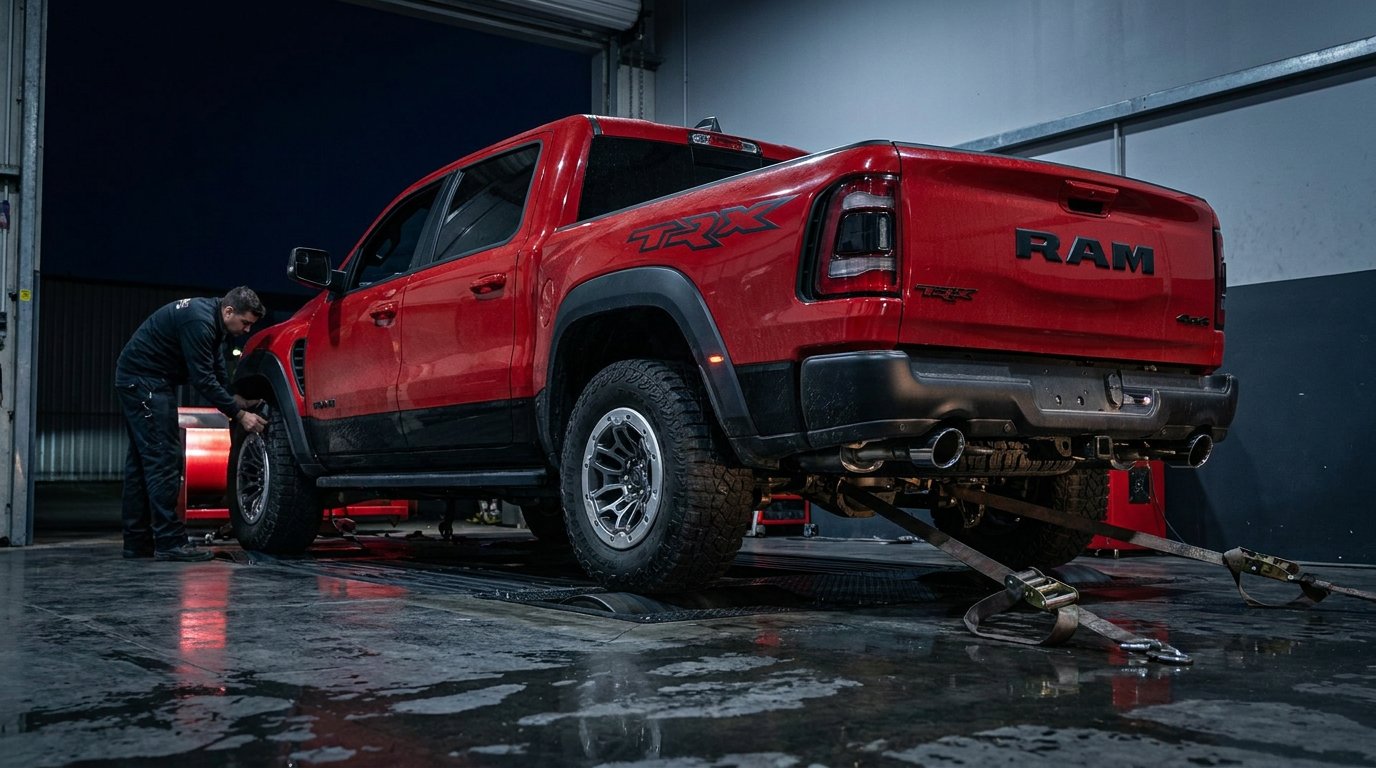
Gen 3 Hemi performance exhaust system upgrades change how spent gases leave the 5.7L, 6.4L and supercharged engines in the Dodge Charger, Dodge Challenger and RAM TRX. The dyno result depends on the full combination: pipe design, engine airflow and calibration. Compare only like-for-like before-and-after pulls.
This guide covers how exhaust design works on these platforms and how to read a dyno chart. It also shows how to plan the exhaust alongside the rest of your build.
Key Takeaways
- Match pipe diameter and layout to your Hemi combination rather than assuming bigger always makes more power.
- Compare dyno results only when baseline, test conditions and vehicle configuration are alike.
- Read the whole torque curve, not just the peak horsepower number.
- Plan the exhaust, cams and tuning as one combination.
Why exhaust matters on a Gen 3 Hemi
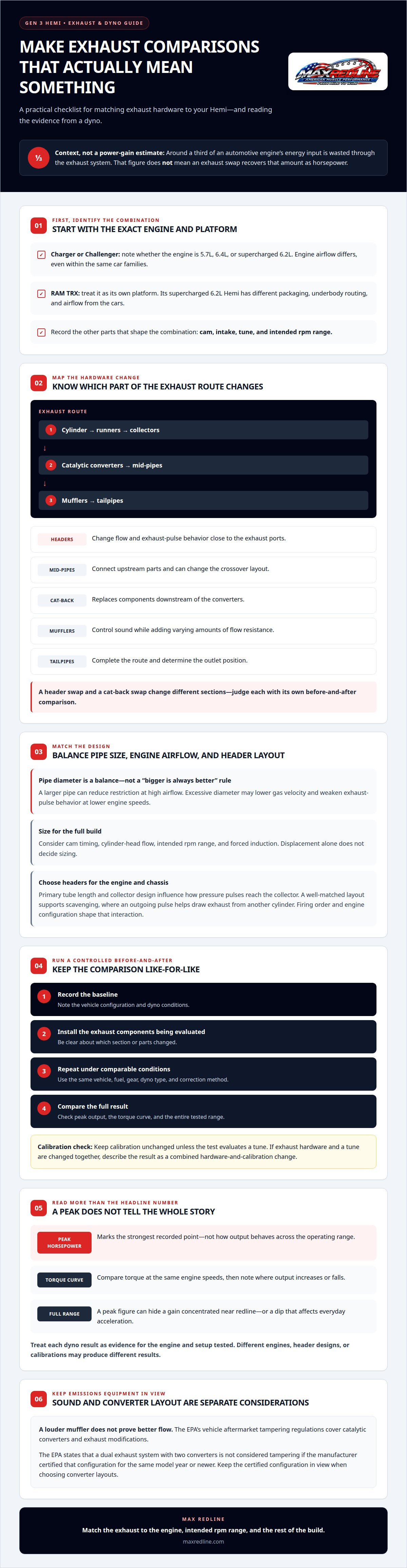
Around a third of an automotive engine's energy input is wasted through the exhaust system, according to Universitat Politècnica de València. That figure describes energy loss, not the horsepower an exhaust swap recovers. It does show why exhaust flow deserves attention.
The Gen 3 Chrysler Hemi engine architectures cover the 5.7L, 6.1L, 6.4L Apache and 6.2L Hellcat V8s. These engines power the Charger and Challenger, and the supercharged 6.2L family reaches the RAM TRX. Each application has different airflow, so each reacts differently to exhaust changes.
Gas leaves each cylinder through the exhaust runners and collectors. It then passes the catalytic converters, mid-pipes, mufflers and tailpipes. Every section adds flow resistance and shapes pressure waves.
Where the system can change
Different upgrades touch different parts of the route. That is why their dyno results are not directly comparable.
- Headers: Change flow and pulse behavior close to the exhaust ports.
- Mid-pipes: Connect upstream components and can change crossover layout.
- Cat-back systems: Replace components downstream of the converters.
- Mufflers: Control sound while adding varying flow resistance.
- Tailpipes: Complete the route and set outlet position.
A header swap alters the path near the engine. A cat-back swap leaves that section alone. Judge each change on its own terms.
Pipe diameter and header design
Diameter is a balancing decision, not a contest to fit the biggest tube. A larger pipe can reduce restriction at high airflow. Excessive diameter may lower gas velocity and weaken exhaust pulse behavior at lower engine speeds.
A street-driven Charger and a heavily modified Challenger can need different sizing. Displacement alone does not decide it. Cam timing, cylinder-head flow, intended rpm range and any forced induction all matter.
Headers add another layer. Primary tube length and collector design influence how pressure pulses reach the collector. A well-matched layout supports scavenging, where an outgoing pulse helps draw exhaust from another cylinder. Firing order and engine configuration shape that interaction, so choose headers built for your specific engine and chassis.
Charger, Challenger and RAM TRX considerations
Dodge Charger and Dodge Challenger
These cars share Hemi engine families, but each engine has its own airflow. Start with your engine: 5.7L, 6.4L or supercharged 6.2L. Then decide whether the goal is sound, response or a full flow upgrade. Plan the exhaust around your cam, intake and tune.
RAM TRX
The TRX is a truck with a supercharged 6.2L Hemi. Its packaging, underbody routing and airflow differ from the cars. Pick parts built for that platform and compare dyno results only against other TRX pulls.
How to read dyno results
Peak horsepower marks the strongest recorded point. The curve shows whether gains extend across the operating range. Compare torque at the same engine speeds, then note where the setup gains or loses output. One peak figure can hide a gain concentrated near redline or a dip that affects everyday acceleration.
Keep the comparison controlled. Use the same vehicle, fuel, gear, dyno type and correction method for baseline and follow-up pulls. Keep calibration unchanged unless the test evaluates a tune. If the exhaust is paired with a tune, call the result a combined hardware-and-calibration change.
- Record the baseline configuration and dyno conditions.
- Install the exhaust components being evaluated.
- Repeat the test under comparable conditions.
- Compare peak output, torque curve and the full tested range.
Treat a dyno result as evidence for the engine and setup tested. Results from a different engine, header design or calibration may not match your vehicle.
Sound and emissions equipment
A louder muffler does not prove better flow. Exhaust changes can also involve emissions equipment. The EPA vehicle aftermarket tampering regulations cover catalytic converters and exhaust modifications. According to the United States Environmental Protection Agency, a dual exhaust system with two converters is not considered tampering if the manufacturer certified that configuration for the same model year or newer. Keep the certified configuration in view when choosing converter layouts.
Max Redline: Exhaust systems
Max Redline is the next step when you are choosing exhaust hardware for a Gen 3 Hemi build. It offers exhaust systems, Hemi Cam Kits, Performance Parts and tuning services. Together they let you plan the exhaust alongside the cam and calibration instead of in isolation.
Match the exhaust to your engine, intended rpm range and other parts rather than chasing peak horsepower claims. Contact Max Redline to discuss exhaust systems for your Charger, Challenger or RAM TRX.
FAQ
Will a bigger exhaust always make more power?
No. Match diameter and layout to the engine combination. Oversized pipes can reduce gas velocity at lower engine speeds.
Can I compare my dyno result to another car's?
Only if the engine, setup, dyno type and conditions are alike. A different engine or calibration may not match.
Do headers and cat-back systems give the same result?
No. They change different parts of the route, so judge each on its own before-and-after pulls.
Should I tune after an exhaust change?
Tuning addresses calibration for the whole setup. If you tune and swap parts together, describe the result as a combined change.
Set the Next Build Priority
Decide what the vehicle must do. Street response, track use and a broader engine build each call for different priorities. Note your engine, current modifications and intended rpm range.
Performance exhaust system upgrades work best as part of a compatible combination. Max Redline offers exhaust systems, Hemi Cam Kits and tuning services for Hemi owners planning related changes. Contact Max Redline about exhaust upgrades, set your target and map the combination.