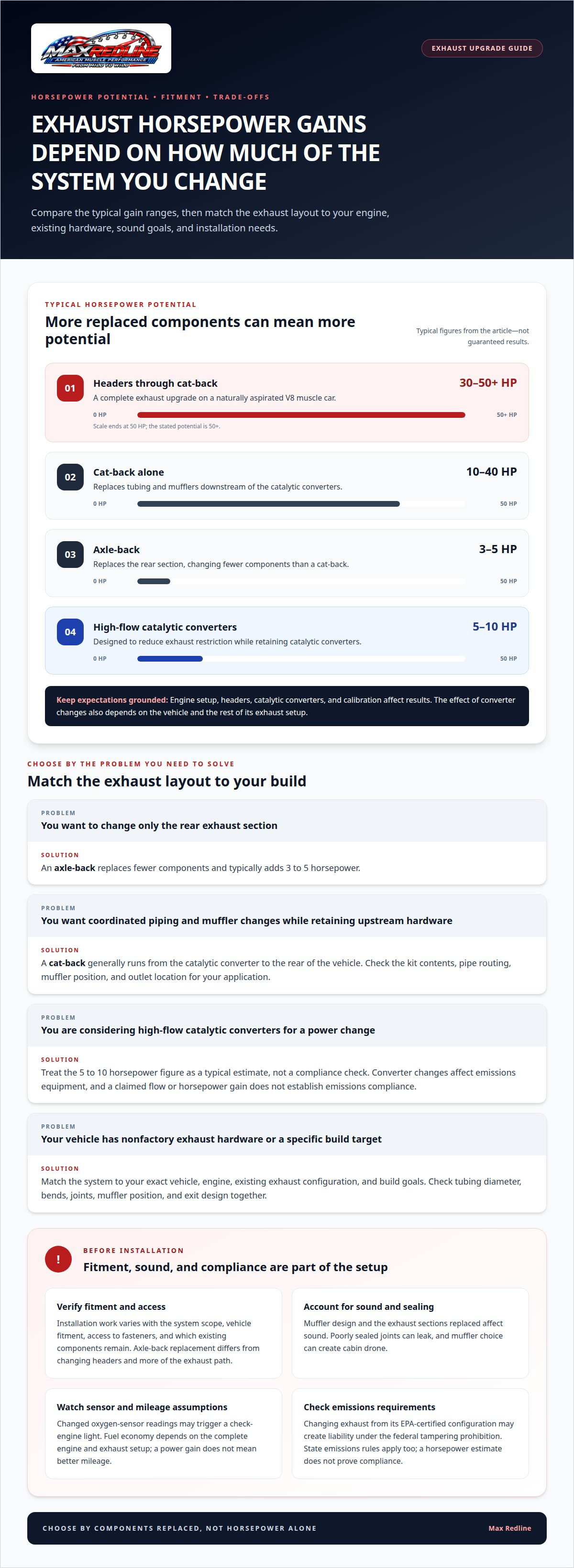
A cat-back typically adds 10 to 40 horsepower, compared with 3 to 5 horsepower for an axle-back, giving it more power potential. An axle-back can still suit you if you want to change the rear exhaust section, while a high-flow exhaust system should match your engine, existing hardware, and build goals. This guide compares both layouts and explains how headers, catalytic converters, and tuning affect horsepower gains and help you choose an exhaust setup for your Mustang, HEMI, Camaro, or Corvette.
Key Takeaways
- Choose a Max Redline axle-back or cat-back exhaust based on which components you want to replace and your performance goals.
- Compare the muffler design and system construction of the Max Redline exhaust to find the sound and exhaust flow characteristics that suit your build.
- Confirm the Max Redline system’s fitment for your vehicle’s model year, engine, existing exhaust configuration, and installation requirements.
- Consider how a Max Redline exhaust upgrade works with headers and tuning when planning a Mustang, HEMI, Camaro, or Corvette build.
How Much Horsepower Can You Gain From an Exhaust System?
A complete exhaust upgrade from headers through the cat-back typically adds 30 to 50+ horsepower to a naturally aspirated V8 muscle car. A cat-back alone typically adds 10 to 40 horsepower, while an axle-back typically adds 3 to 5 horsepower. An axle-back replaces the rear section, so it changes fewer components. Engine setup, headers, and calibration affect the result. Choose the layout based on which parts you want to replace.
High-flow catalytic converters typically add 5 to 10 horsepower. Compared with stock converters, they’re designed to reduce exhaust restriction while retaining catalytic converters. Their effect depends on the vehicle and the rest of its exhaust setup. Converter changes also affect emissions equipment, so a horsepower estimate doesn’t establish emissions compliance.
Street legality depends on federal and state requirements. The U.S. Environmental Protection Agency says changing a vehicle’s exhaust from its EPA-certified configuration may create liability under the federal tampering prohibition. State emissions rules apply too, so a claimed flow or horsepower gain does not prove that a setup is compliant.
Installation requirements depend on the vehicle and the system’s scope. Replacing only an axle-back system is different from changing headers and more of the exhaust path. Fitment, access to fasteners, and which existing components remain all affect the work involved.
Sound usually changes with muffler design and the exhaust sections replaced. Fuel economy and emissions depend on the complete engine and exhaust setup, so do not assume a power gain means better mileage. Installation difficulty varies with fitment and access to hardware. Common tools include sockets, wrenches, penetrating oil, and suitable vehicle supports. Poorly sealed joints can leak, while muffler choice can create cabin drone. Changed oxygen-sensor readings may trigger a check-engine light. Warranty effects depend on the vehicle’s warranty terms and the specific issue.
Exhaust brands and muffler technologies
Muffler design shapes exhaust tone and affects how gases move through the rear section. Chambered mufflers redirect exhaust pulses through internal chambers, while straight-through designs route flow through a perforated core. Performance mufflers use different layouts to balance sound, packaging, and flow. Compare the design with your engine, existing piping, and preferred sound instead of choosing by brand name alone.
For a concrete example, the Flowmaster Super 40 Series chambered muffler has a 3.00-inch center inlet and an offset outlet. Those dimensions describe its inlet and outlet configuration, not a universal fit. Match the inlet diameter and outlet position to your vehicle’s exhaust routing. A mismatch can require additional fabrication or prevent the muffler from fitting the intended location.
Direct-fit mufflers are designed for specific vehicle applications and connect to the corresponding exhaust layout. Before choosing one, confirm the model year, engine, body style, inlet and outlet orientation, and connection points. A muffler listed for a Mustang, for example, should not be assumed to fit every Mustang generation or engine configuration. Application details determine whether it aligns with the factory system.
Compare brands by construction, muffler design, dimensions, and vehicle application. Stainless steel may suit buyers prioritizing corrosion resistance, while other material choices can affect durability and appearance. Check the product’s stated material and dimensions rather than assuming every model from one manufacturer has the same construction. Sound descriptions vary too, so decide whether you want a deeper tone, a sharper note, or less cabin noise.
Use this selection sequence: identify the vehicle’s exact exhaust configuration, match the muffler’s inlet and outlet dimensions, then choose a chambered or straight-through design to suit your sound target. Finally, confirm the muffler’s position and connection style against the rest of the system. This narrows the options to parts suited to your setup, not just a sound profile.
Cat-back exhaust systems
A Cat-back exhaust generally runs from the catalytic converter to the rear of the vehicle. It replaces tubing and mufflers downstream of the converters, letting you change that section without replacing the entire exhaust path. Choose this layout when you want coordinated piping and muffler changes while retaining upstream exhaust hardware. System contents depend on the vehicle application and kit design.
Max Redline sells the Stainless Works CTS-V cat-back exhaust. The Flowmaster Outlaw Cat-Back Exhaust System, part 818228, provides a separate example of how system design varies: its listed configuration uses 3.00-inch stainless-steel exhaust and a bedside exit. That exit position affects where the exhaust terminates, so compare it with your truck’s body layout and intended appearance. The 3.00-inch dimension describes the system’s tubing, not a universal specification for every vehicle.
Size the piping to the engine and build, not to a larger-is-always-better assumption. For a 600 HP build, common recommendations call for 3-inch cat-back piping and 1-7/8 to 2-inch primary header tubes. Those dimensions describe a matched performance combination. Your engine output, headers, catalytic converters, and remaining exhaust components all influence the suitable layout.
Before selecting a system, match its vehicle application, pipe routing, muffler position, and outlet location to your car or truck. A bedside-exit kit, such as the Flowmaster 818228 example, is designed around a specific routing plan. Confirm that the kit’s listed application matches your vehicle’s model year, engine, and body configuration. Then compare tubing size and material with your build goals.
A cat-back upgrade changes more than the muffler. Tubing diameter, bends, joints, and exit design work together, so check them as one assembly, especially if the vehicle already has nonfactory headers or catalytic converters. Matching the complete fitment helps avoid buying a system whose routing conflicts with existing hardware.
Mustang, HEMI, Camaro, and Corvette applications
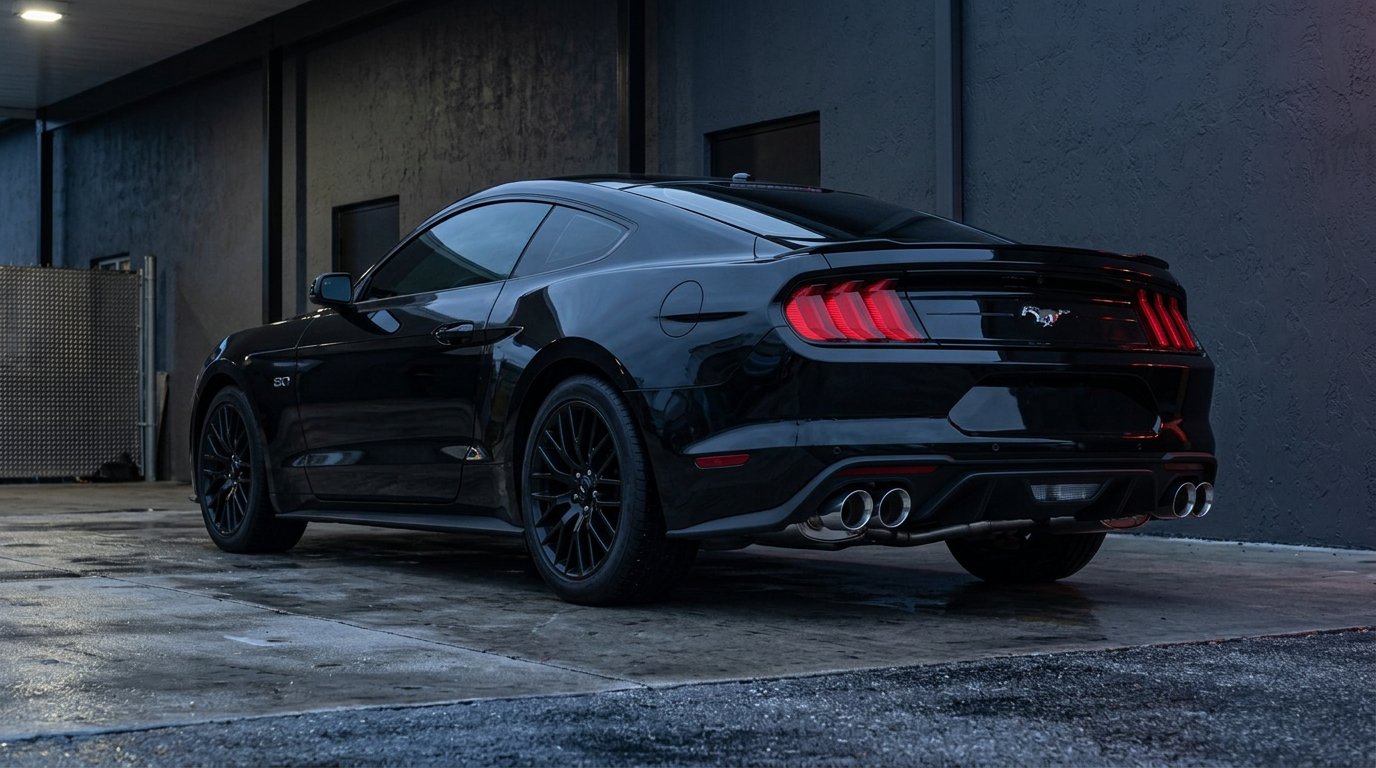
Choose an exhaust by matching your exact vehicle, engine, and current hardware, not just its badge. A Mustang GT and a 6.4L HEMI Challenger need application-specific parts, and Camaro or Corvette configurations also vary by model year and engine. Start with those details, then identify whether you’re replacing the axle-back, cat-back, headers, or multiple sections. This answers the key selection question: fit the system to the engine and existing exhaust layout first, then match it to your power target.
Power estimates depend on the whole combination. A Mustang GT or 6.4L HEMI Challenger with a full exhaust system, cold air intake, and tune can gain 70 to 100+ wheel horsepower over stock. That figure applies to the combined upgrades, not the exhaust alone. Headers, catalytic converters, intake hardware, and calibration all contribute to the final result. Don’t assign the package’s entire gain to one exhaust component.
For a street-driven Camaro or Corvette, set your priorities before selecting parts. Decide whether you want to change the rear-section sound or upgrade more of the exhaust. Then compare the system’s application, tubing route, muffler design, and outlet position with the car’s existing configuration. A part designed for one engine or model year may not fit another version of the same nameplate.
For any of these platforms, start by recording the model year and engine, mapping the installed exhaust components, and setting a realistic power and sound target. Match each replacement section to the hardware that will remain. If headers or other engine changes are part of the build, account for them when planning the exhaust and tune. This keeps a Mustang, HEMI, Camaro, or Corvette parts list from treating separate components as interchangeable.
High-flow exhaust system fitment and installation checks
Start with the exact model year, engine, body style, and drivetrain. The exhaust kit must match the vehicle’s configuration, not just its badge. Note whether you are replacing an axle-back, cat-back exhaust, headers, or the full exhaust path. Existing aftermarket parts can change connection points and routing.
Match the part’s application details to the vehicle before selecting it. For a high flow exhaust system, check:
- Model-year fitment and engine configuration.
- Pipe diameter, inlet and outlet positions, and exhaust routing.
- Connection types, hangers, and retained factory components.
- Clearance around the chassis, suspension, and other underbody hardware.
For example, a system with a bedside exit needs the right truck body and routing. A different outlet position can affect fit and appearance. Similarly, a cat-back designed around factory catalytic converters may not connect as intended if headers or other exhaust components have changed. Treat each part as one element of the vehicle’s complete exhaust layout.
Plan installation around access and hardware condition. Support the vehicle securely, and allow for old fasteners that may resist removal. Keep oxygen sensors and wiring positioned as intended, and align joints without forcing pipes against the chassis. After assembly, inspect connections for leaks and check that the exhaust clears nearby components during normal movement.
Fitment also affects tuning decisions. Headers or catalytic-converter changes can alter exhaust flow and sensor readings, so assess the complete combination rather than the rear section alone. Match a high flow exhaust system to the engine’s current hardware and intended use. A vehicle identification number can help identify the exact application, while model year and engine remain essential fitment details.
Build your next upgrade around the car you want to drive, not a parts list assembled in isolation. A high flow exhaust system should work with your engine’s existing hardware and the direction of your build. Max Redline offers exhaust systems, Hemi Cam Kits, and tuning services, giving you options to plan compatible performance upgrades. Its team brings hands-on performance experience to parts selection and tuning decisions, helping connect hardware choices to your vehicle’s goals. Contact Max Redline about exhaust options to take the next step toward a setup that fits your build. Keep the plan focused, choose parts with purpose, and get your muscle car ready for the road.
Frequently Asked Questions
Axle-Back vs Cat-Back: Which Adds More Power?
A cat-back exhaust generally offers more power potential than an axle-back because it replaces a longer section of the exhaust. Max Redline sells Stainless Works cat-back exhaust systems, including a CTS-V application. Choose an axle-back if you want to replace rear components while retaining more of the existing system. Compare the same vehicle under consistent conditions before and after installation to help separate the exhaust’s effect from other build changes.
How Much HP Does a Cat-Back Exhaust Add?
Use the cat-back estimate discussed in the horsepower section as a planning reference, not a guaranteed result. Max Redline sells the Stainless Works CTS-V cat-back exhaust; confirm fitment for your vehicle before ordering. For your build, compare the same vehicle before and after installation under consistent test conditions. Record the engine configuration and any other hardware or calibration changes to interpret dyno results accurately.
What Is the Difference Between Axle-Back and Cat-Back Exhaust?
The practical difference is how much of the existing exhaust remains. An axle-back focuses on rear components, while a cat-back exhaust replaces a longer downstream section. Max Redline’s Stainless Works CTS-V cat-back exhaust is one example of a vehicle-specific option. Before choosing a system, locate the joints in your current exhaust and check whether aftermarket parts have changed them. Confirm fitment for your configuration rather than relying on the kit’s label alone.
What is a high-flow exhaust system and how does it work?
A high-flow setup is intended to let exhaust gases move with less restriction through compatible components. Max Redline sells Stainless Works exhaust products, including CTS-V cat-back exhausts and headers for select applications. The effect depends on the complete combination, including the engine, exhaust routing, and other installed hardware. Match the parts to your vehicle and build goals, and confirm fitment before ordering.
How much horsepower and torque can a high-flow exhaust system add?
Horsepower and torque are separate measurements, so review both curves rather than relying on peak horsepower alone. Compare before-and-after dyno results from the same vehicle under consistent test conditions, and document other changes. Max Redline offers dyno tuning for installations, which can help you evaluate how a compatible Stainless Works exhaust part performs on your vehicle. The curve shows how output shifts across the operating range, beyond a single peak figure.
What are the differences between cat-back, axle-back, header-back, and turbo-back exhaust systems?
These labels describe where a replacement starts and how much of the exhaust it covers. Header-back systems extend downstream from the headers, while turbo-back systems begin after the turbocharger. Cat-back exhaust and axle-back systems start farther back and replace narrower sections. Max Redline sells Stainless Works headers and cat-back exhausts for select applications; confirm the vehicle’s model year and connection points before comparing kit layouts. On a turbocharged vehicle, also identify retained emissions hardware to determine which system boundary suits the build.