The right performance exhaust fitment starts with your vehicle’s exact year, make, model, engine, and exhaust layout, not a universal kit. Axle-back, cat-back, and header-back systems replace different sections of the exhaust, so the right choice depends on your setup and the change you want. Professional installation can help catch routing and clearance conflicts before they become a problem.
It’s easy to focus first on sound and power. But pipe routing, underbody clearance, and space around the rear bumper also determine whether a system fits cleanly.
Learn how the main installation types differ, which vehicle details matter, and when professional installation can help. We’ll also cover how tailpipe exits, exhaust configuration, and clearance shape the fitment decision, so you can narrow down the right setup for your vehicle.
Key Takeaways
- Choose axle-back, cat-back, or header-back based on how much of the factory exhaust you want to replace.
- Match the system to your vehicle’s year, model, engine, and exhaust layout to narrow down compatible options.
- Account for pipe routing and bumper or diffuser clearance when selecting tailpipe exits.
- Professional installation can help identify fitment conflicts and alignment issues before the exhaust is fully secured.
What is the difference between axle-back, cat-back, and header-back exhaust installations?
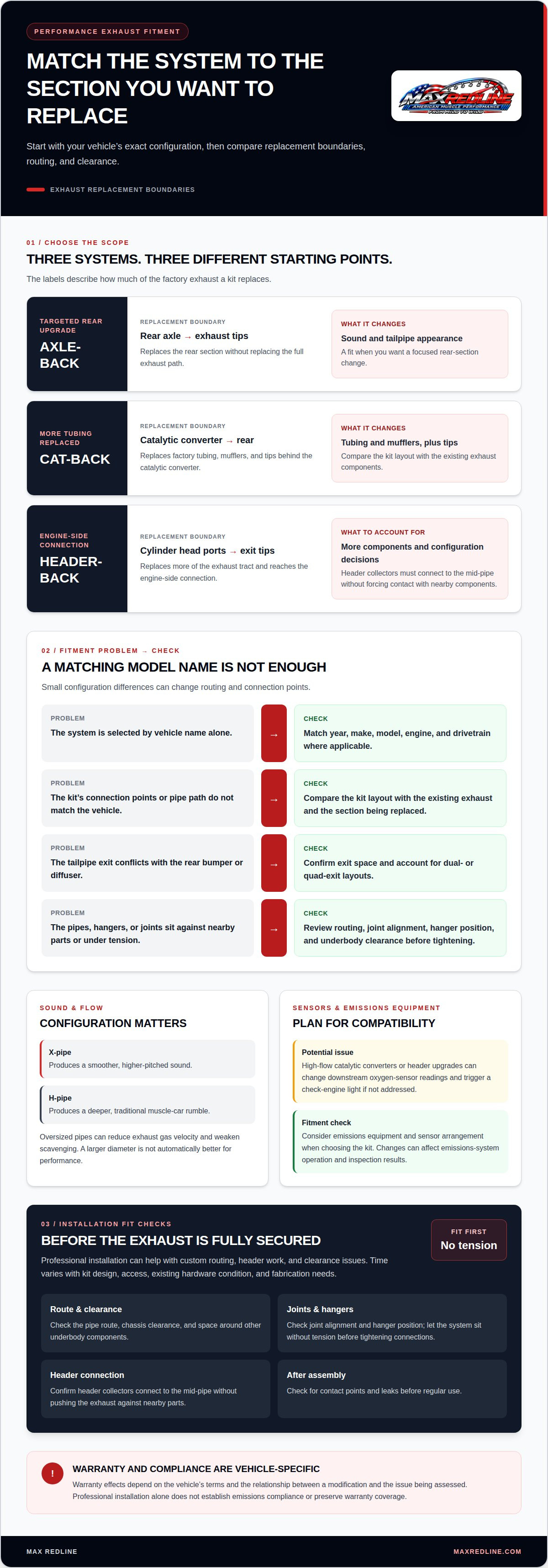
These labels describe how much of the exhaust system a kit replaces. An axle-back runs from behind the rear axle to the exhaust tips. It changes the rear section, affecting sound and tailpipe appearance without replacing the full exhaust path. A cat-back replaces the factory tubing, mufflers, and tips from the catalytic converter to the rear. A header-back extends from the cylinder head ports to the exit tips, replacing more of the exhaust tract.
Choose based on the components you want to change. An axle-back suits a targeted rear-section upgrade, while a cat-back replaces more tubing and the mufflers. A header-back reaches the engine-side exhaust connection, involving more components and configuration decisions. Pipe diameter and routing matter too. Oversized pipes can reduce exhaust gas velocity and weaken scavenging, so a larger diameter isn’t automatically better for performance.
Exhaust features also affect sound and compatibility. An X-pipe produces a smoother, higher-pitched sound, while an H-pipe produces a deeper, traditional muscle-car rumble. High-flow catalytic converters or header upgrades can change downstream oxygen-sensor readings and trigger a check-engine light if not addressed. Match the kit’s layout to your vehicle and existing exhaust components before choosing accessories such as clamps, hangers, gaskets, or tips.
Under 40 CFR 202.22, a motor vehicle can fail the visual exhaust-system inspection for the Interstate Motor Carrier Noise Emission Standards, according to the Federal Motor Carrier Safety Administration, U.S. Department of Transportation. This standard concerns that named inspection; it does not define which installation type fits a particular vehicle. For a precise comparison, map each kit’s replacement boundary against the components under the vehicle.
- Axle-back: Replaces the section from the rear axle to the tips.
- Cat-back: Replaces tubing, mufflers, and tips behind the catalytic converter.
- Header-back: Replaces the exhaust tract from the cylinder head ports to the exit tips.
Do I need professional installation for a performance exhaust?
Professional installation can help with custom routing, header work, or clearance issues. Aftermarket exhaust changes may also affect emissions equipment, inspection results, and warranty considerations, depending on the vehicle and components.
Custom Exhaust Design and Installation
A direct-fit system is designed for a defined vehicle configuration, while a custom setup may need different pipe routing or connection points. Match parts to the vehicle’s year, make, model, engine, and existing exhaust layout. Header installation adds another fitment check: the header collectors must connect to the mid-pipe without forcing the exhaust against nearby components.
Exhaust flow depends on a compatible path from the headers through the mid-pipe and rear section. A mismatch can complicate alignment or cause clearance problems. Consider a custom design if your intended configuration differs from a direct-fit kit. Review every connection and the route beneath the vehicle before choosing parts.
Installation Time and Fitment Checks
Installation time depends on the kit design, access to connections, and condition of the existing hardware. A direct-fit exhaust may use factory mounting points, while custom work can require extra fabrication and alignment. Corroded fasteners or components that resist removal can also affect the work, so there’s no single installation time for every vehicle.
Fitment checks should cover pipe routing, joint alignment, hanger position, and clearance around the chassis and other underbody components. The system should sit without tension before connections are tightened. After assembly, check for contact points and leaks. These checks can reveal a misaligned mid-pipe or header connection before the vehicle returns to regular use.
Compliance, Inspection, and Warranty Considerations
Changes to catalytic converters, oxygen sensors, or related exhaust components can affect emissions-system operation and inspection results. Consider the vehicle’s emissions equipment and sensor arrangement when selecting a kit. A warning light after header or catalytic-converter changes can indicate altered downstream oxygen-sensor readings, so plan for sensor compatibility.
Warranty effects depend on the vehicle’s terms and the relationship between a modification and the issue being assessed. Review the applicable terms before changing exhaust hardware. Professional installation alone does not establish emissions compliance or preserve warranty coverage. Base your decision on the vehicle, the exact components, and the work required.
Vehicle-specific exhaust fitment
Fitment depends on your vehicle’s exact configuration, not just its model name. Match the exhaust system to the year, engine, and existing exhaust layout before comparing material or sound.
Vehicle-Specific Fitment Details
Start with the year, make, model, engine, and drivetrain where applicable. Two vehicles sharing a model name may use different exhaust routing or connection points. For example, a CORSA cat-back system is featured for 2025-and-newer RAM 1500 trucks with the 3.0-liter Hurricane engine. That application-specific detail shows why engine identification matters alongside the truck’s name.
Stainless steel describes the material, not vehicle compatibility. Confirm that the system is designed for your vehicle configuration and the exhaust section being replaced. A mismatch can leave connection points or pipe routing out of alignment.
Fitment Measurements and Configuration
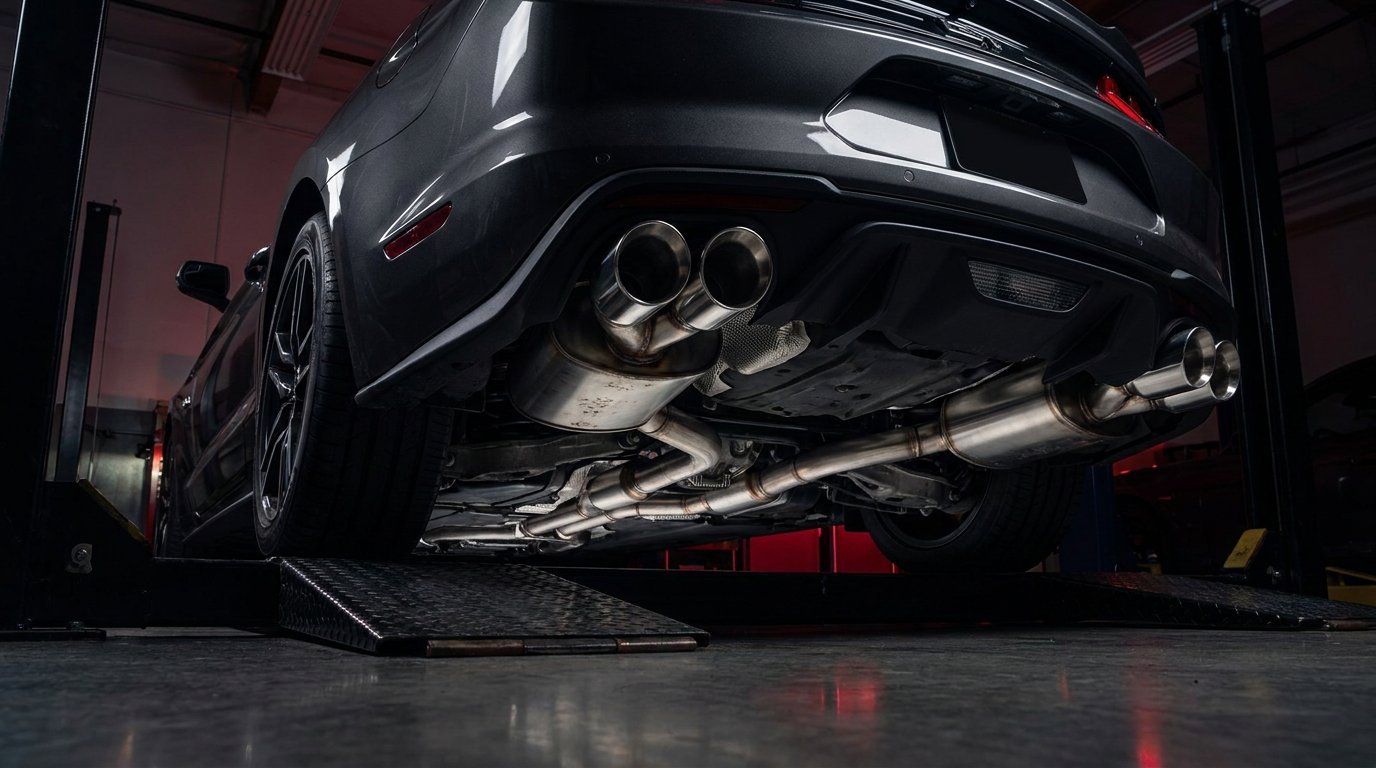
Assess the exhaust path from its connection points to the tailpipe exits. Compare pipe routing, underbody clearance, hanger locations, and space around nearby components. Dual- or quad-exit tailpipes also need room at the rear bumper or diffuser. That layout can affect which exhaust configuration fits, even when the main pipes follow the vehicle’s existing route.
Vehicle-specific performance exhaust fitment also depends on your intended setup. Note whether the system retains factory components or changes the headers, mid-pipe, or rear section. These details determine connection compatibility and clearance needs.
Manufacturer Part Numbers and Fitment Charts
Use the manufacturer’s part number to identify the exact exhaust system, then compare its fitment chart with your vehicle’s year, make, model, and engine. Check every qualifier, including engine designation and body configuration. A model-name match alone doesn’t confirm compatibility. If the chart specifies an engine, use that exact application rather than assuming related trims share the same exhaust.
How much does a vehicle-specific performance exhaust system cost? The price depends on the vehicle application, system type, materials, and included components, so compare the exact configuration rather than relying on a general figure. To verify fitment, match the manufacturer’s part number to the chart entry for your vehicle’s exact year, model, and engine.
What measurements and exhaust configuration details determine fitment?
Map the exhaust path and identify its connection points before selecting a system. For a header and mid-pipe setup, compare the collector position, mid-pipe bends, factory mounting points, and rear exit location. These details determine whether the pipes can follow the vehicle’s underbody without contacting nearby components. A catalog description won’t show every clearance constraint.
Check space around the transmission, driveshaft, crossmembers, and suspension along the entire exhaust route. The pipe must clear components that move or flex during driving, not just avoid contact while parked. Also compare hanger locations and joint alignment. If the system has to be forced into place to reach a mount, its routing or connections may not match the vehicle.
Tailpipe configuration affects rear clearance. Dual- or quad-exit tailpipes need room in the rear bumper or diffuser. Compare the outlet position with the opening and surrounding trim. A centered exit, for example, needs a different rear layout from outlets near both bumper corners. Account for the tips as well as the pipes leading to them.
Configuration details include single or dual exhaust paths, crossover placement, and catalytic-converter or oxygen-sensor locations. Match these components to the intended system layout. Pipe diameter matters too: oversized pipes can reduce exhaust gas velocity and weaken scavenging. Choose a diameter suited to the engine and system configuration rather than assuming a larger pipe always improves performance.
- Connection points: Compare header collectors, mid-pipe joints, and existing exhaust interfaces.
- Underbody route: Check bends, hangers, moving components, and clearance along the full path.
- Rear outlets: Match tip position and exit count to the bumper or diffuser openings.
Use those measurements to narrow the system configuration before choosing hardware. Explore exhaust systems for options that match your vehicle’s exhaust layout.
Max Redline: Exhaust systems
Max Redline offers exhaust systems and performance parts to help drivers choose hardware for a specific vehicle configuration. Once you’ve identified the exhaust layout, connection points, and clearance requirements, explore options that suit your setup. Matching parts to these details helps narrow your selection before purchase.
For a broader engine build, Hemi Cam Kits and tuning services may also suit the project. Keep each component aligned with the vehicle and intended combination, especially when exhaust changes accompany other upgrades. Max Redline offers parts and tuning, not exhaust installation.
Contact Max Redline to discuss exhaust systems and performance parts for your build.
Plan the next move for your build
Set a clear goal for the next stage of your build before choosing parts. Decide whether your priority is a particular sound, a coordinated engine combination, or a broader power upgrade. That gives performance exhaust fitment a purpose beyond swapping hardware and helps keep future changes aligned with your goal.
Consider the exhaust alongside the rest of the build. Max Redline offers exhaust systems, Hemi Cam Kits, and tuning services, providing related hardware and tuning options to consider as your project takes shape. Note which upgrades are already planned, and keep the vehicle application and intended use central to each decision. This helps you plan a coherent setup rather than treating every component as an isolated change.
When you’re ready to discuss parts for your vehicle, contact Max Redline about fitment. Bring your build priorities and planned upgrades into the conversation. Take the next step with a setup direction that fits your goals.
Frequently Asked Questions
Are custom exhaust installations secured using factory mounting points?
Custom routing can work if it aligns with the vehicle’s existing hanger locations. A revised pipe path may need adjusted hangers or additional fabrication to support the system without loading its joints. For example, a custom tailpipe exit can shift the rear mounting position. The finished setup should be secure, avoid stressing connections, and clear nearby components.
What are the main benefits of upgrading to a custom aftermarket exhaust system?
A custom system lets you tailor exhaust routing, outlet placement, and sound to a specific build. It can also address packaging limits that prevent a standard layout from fitting cleanly. For example, a modified engine combination may need a different header-to-mid-pipe connection. Treat changes in flow or power as dependent on the complete setup, not as automatic results of custom parts.
Will installing an upgraded exhaust system cause check engine lights?
It can, especially if installation changes catalytic converters, oxygen sensors, or their positions. After exhaust hardware changes, a sensor may report readings outside the vehicle’s expected range. For example, a header swap that changes downstream sensor readings can trigger a warning light. Consider sensor placement and emissions components as part of the system configuration, not as afterthoughts.
How do I find an exhaust system that fits my vehicle’s year, make, model, and engine?
Use the vehicle’s exact year, make, model, and engine designation to search the manufacturer’s application chart. Then compare the listed part number and configuration with the vehicle’s current exhaust layout. An engine name alone may not distinguish every application. Record the full engine designation shown for the vehicle, then match it to the chart before selecting a system.
How can I check whether an exhaust fits a specific trim, drivetrain, or wheelbase?
Find those exact qualifiers in the manufacturer’s fitment chart and compare them with the vehicle’s original configuration. Trim differences can affect exhaust routing or outlet details, while drivetrain and wheelbase can change underbody packaging. Don’t assume compatibility from a shared model name. If the chart separates applications by configuration, choose the entry that matches each vehicle detail.
What is the difference between direct-fit and universal-fit exhaust systems?
A direct-fit system is designed for a defined vehicle application, with components intended to connect to that configuration. A universal-fit system offers more flexibility but may require cutting, adapting, or fabricating sections to suit the vehicle. For example, a universal muffler may need custom pipe connections. Choose based on whether you need application-specific parts or plan to build a custom layout.