
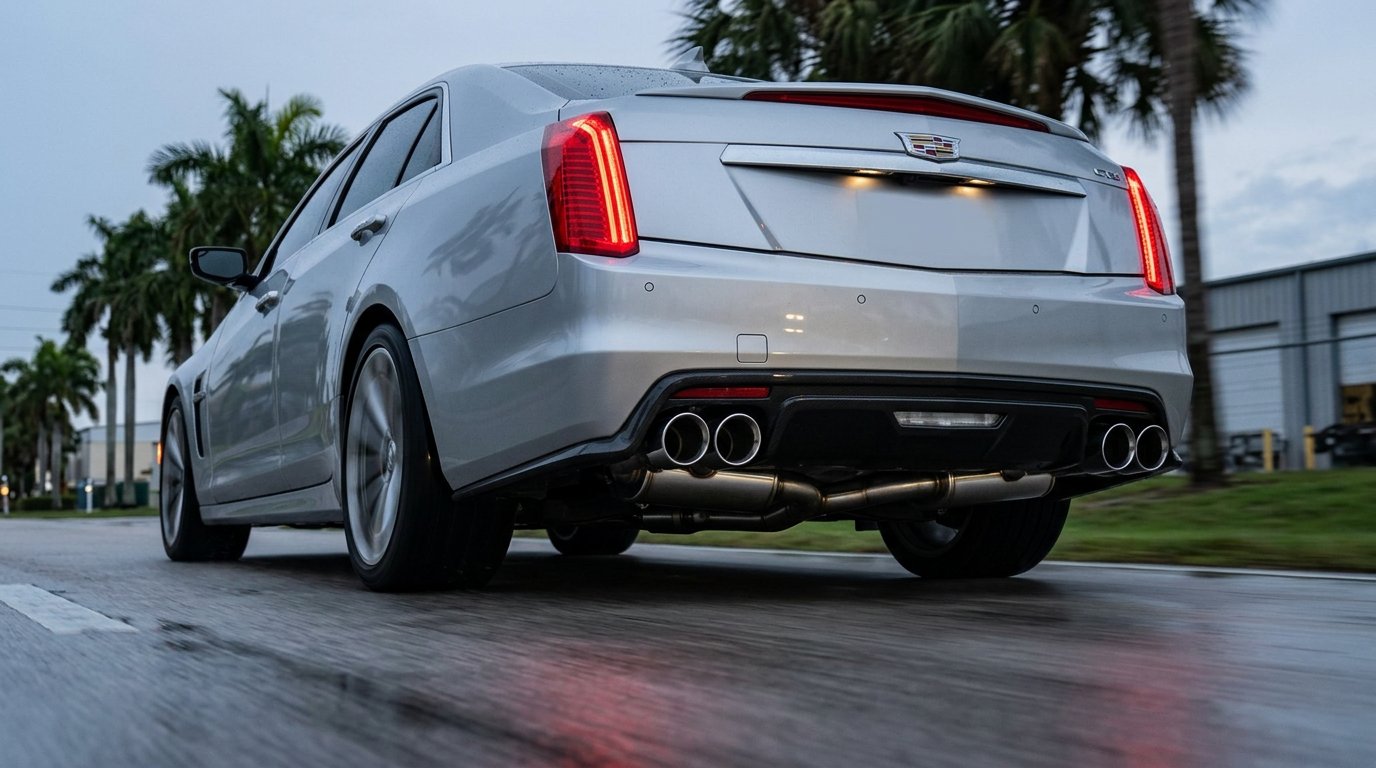
A Stainless Works cat-back exhaust can change how your vehicle sounds as throttle input and engine RPM shift. Max Redline carries Stainless Works exhaust products, including a CTS-V cat-back exhaust, so start by checking product fitment for your vehicle.
Throttle input and engine RPM change exhaust flow, so sound can deepen or sharpen as the engine accelerates rather than remain fixed. Pipe diameter, mufflers, and resonators each shape the sound you hear at different engine speeds. A DIY installation affects the result only if the selected parts, vehicle fitment, or assembly changes the exhaust path.
According to the U.S. Environmental Protection Agency, under its stated federal tampering rule, a vehicle’s certified emissions-control configuration, including its exhaust configuration, may not be changed. This guide explains how throttle and RPM alter tone and what a DIY installation can change, with practical attention to parts, fitment, and sound under acceleration for your specific vehicle.
Key Takeaways
- Track how throttle and engine RPM change exhaust tone, then use those conditions to define the sound you want.
- Compare pipe diameter, muffler design, and resonator placement as a system; MotorTrend's episode 8 compares 2.5-inch and 3-inch exhaust pipes and mufflers for a street/strip V-8.
- Choose between cat-back, axle-back, and header-back coverage based on which part of the exhaust path you want to change.
- Before installation, match the exhaust to your vehicle’s model year and configuration, including the relevant engine and existing exhaust layout.
Throttle- and RPM-Responsive Exhaust Sound
Throttle position and engine RPM change exhaust flow, so the tone shifts between idle, cruising, and acceleration. The sound depends on the engine and exhaust configuration. Under the U.S. Environmental Protection Agency’s stated federal tampering rule, a vehicle’s certified emissions-control configuration, including its exhaust configuration, may not be changed.
Exhaust System Sound Comparisons
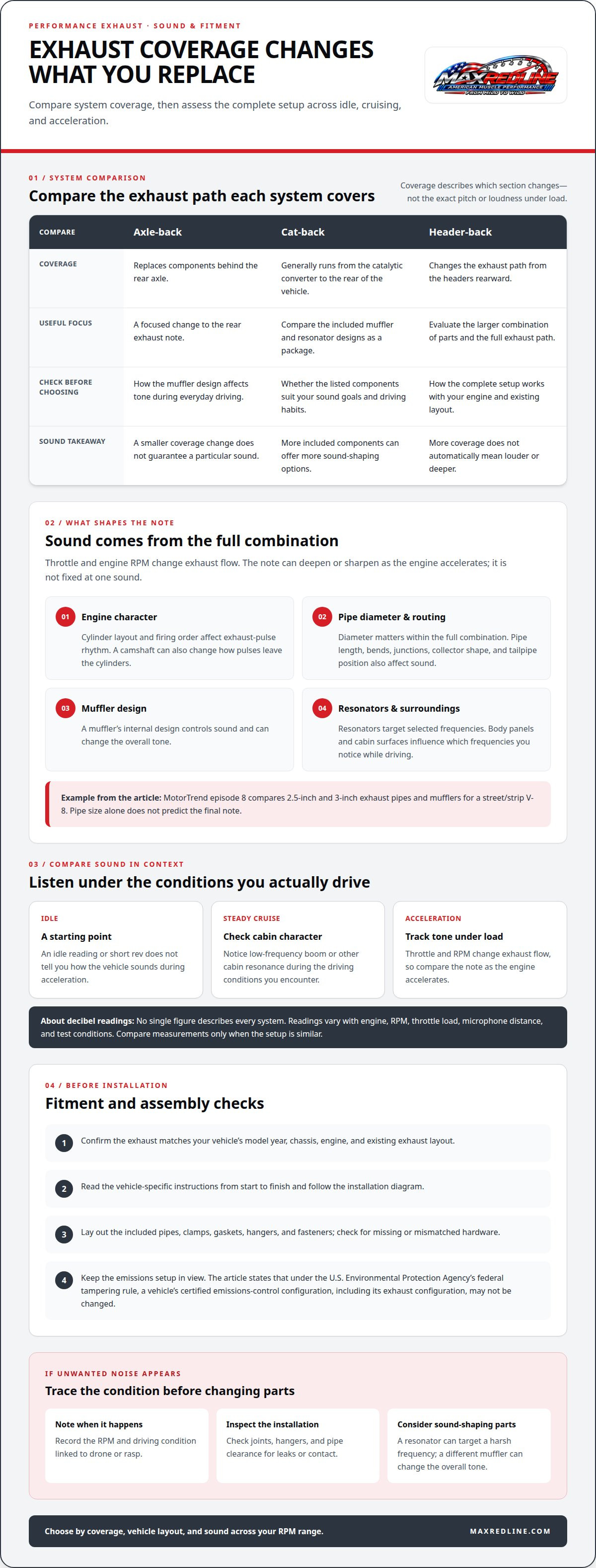
An axle-back replaces components behind the rear axle, while a cat-back generally runs from the catalytic converter to the rear. A header-back changes the exhaust path from the headers rearward. Compare each system’s coverage and included parts with your vehicle’s existing layout. This shows which section changes, but not the exact loudness or pitch you’ll hear under load.
Sound-Shaping Components
Pipe diameter, muffler design, and resonator placement work together to shape the note. A muffler controls sound through its internal design; a resonator targets selected frequencies. MotorTrend episode 8 compares 2.5-inch and 3-inch exhaust pipes and mufflers for a street/strip V-8. For the performance exhaust sound you want, consider how the complete combination behaves across your usual RPM range.
Aftermarket Exhaust Loudness
How loud are aftermarket exhaust systems in decibels? No single decibel figure describes every system. Readings vary with the engine, RPM, throttle load, microphone distance, and test conditions. Compare measurements only when the recording or test setup is similar. An idle reading won’t tell you how the car sounds during acceleration.
Reducing Drone and Rasp
How can you reduce exhaust drone or rasp after installation? Note the RPM and driving condition when the unwanted noise occurs, then inspect joints, hangers, and pipe clearance for leaks or contact. A resonator can target a harsh frequency, while a different muffler can change the overall tone. Reassess the performance exhaust sound after each change.
What Factors Affect Exhaust Sound?
The engine creates the sound before exhaust parts shape it. Cylinder layout and firing order affect the spacing of exhaust pulses, giving different engines distinct rhythms. A camshaft can also change how those pulses leave the cylinders. As a result, two vehicles with similar exhaust hardware can sound different. Consider the engine’s character, not just the sound of a parts demonstration.
Pipe diameter still matters, but compare it within the full combination. MotorTrend episode 8 compares 2.5-inch and 3-inch exhaust pipes and mufflers for a street/strip V-8. The useful takeaway is to assess pipe size alongside the engine and intended use. The number alone does not predict the final note. Collector shape and the transition from headers into the rest of the system also affect how pulses combine.
Routing adds another layer. Pipe length, bends, junctions, and tailpipe position affect how sound waves travel before leaving the vehicle. Changing the outlet position can alter how the note seems inside the cabin, even when the engine and muffler stay the same. Body panels and cabin surfaces also influence which frequencies you notice while driving.
Define the performance exhaust sound you want by describing its character and when you hear it. Separate engine rhythm from harshness, cabin resonance, and outlet volume. For example, a sharp note under load points to a different issue than a low-frequency boom in the cabin during steady cruising. Use those observations to assess a complete setup under comparable driving conditions, rather than relying on a single rev or recording.
How Do Cat-Back, Axle-Back, and Header-Back Exhaust Systems Compare for Sound?
Compare systems by the sound change you want, not by the label alone. Listen at idle, under steady throttle, and during acceleration. A short rev may make one setup seem aggressive, while in-cabin cruising reveals another side of its character. When possible, use recordings from the same vehicle generation and engine; similar hardware can sound different on another engine.
An axle-back is worth considering when your goal is to change the rear exhaust note. Pay attention to how its muffler design affects the tone during everyday driving, not just wide-open throttle. A focused change may suit you if the current sound is close and you want to adjust its character without replacing the whole setup.
A cat-back may offer more flexibility because its package can include several sound-shaping components. Compare the listed muffler and resonator designs, then consider whether the resulting tone suits your driving habits. Header-back systems change more of the exhaust path, so evaluate the full combination instead of assuming a larger system will be louder or deeper.
Before deciding, write down your priorities: a deeper tone, a sharper acceleration note, or a quieter cabin at cruise. Compare product descriptions and sound samples with those goals, taking your engine and existing hardware into account. Choose a system whose documented components and sound behavior suit your car. The best match delivers the character you want in the driving conditions you actually encounter.
What to Check Before Installing a Performance Exhaust
Before beginning installation, read the vehicle-specific instructions for your Max Redline performance exhaust from start to finish. Lay out each included pipe, clamp, gasket, hanger, and fastener, then match the parts to the installation diagram. This can reveal missing or mismatched hardware before work begins. Note instructions for your vehicle’s chassis, engine, and model year; underbody packaging can vary across configurations, even within the same model line.
Keep the emissions setup in view as you plan the change. According to the United States Environmental Protection Agency, under its stated federal tampering rule, a vehicle’s certified emissions-control configuration, including its exhaust configuration, may not be changed. Compare the planned exhaust components with the vehicle’s existing certified configuration before installation. A sound goal does not override that requirement.
Review any sensor provisions shown in the kit instructions for your specific exhaust system. Compare their locations with the existing exhaust, and make sure wiring can reach without stretching or touching hot components. If the instructions show connectors or sensor openings, confirm their placement before tightening the system. Follow the specified assembly order so the parts align as intended, rather than forcing a connection into place.
Use the kit’s installation sequence and hardware requirements as your guide. Keep removed fasteners and factory components organized by location, especially if the instructions call for reusing them. After assembly, follow the manufacturer’s guidance for inspecting connections and fasteners. Note any unusual fit or contact, and resolve it before regular driving. A methodical setup helps keep the work organized and the finished system aligned with your vehicle’s intended configuration.
How to Confirm Exhaust Fitment for Your Vehicle
Start with the exact model year, make, model, and engine. A Ford F-150 can have different exhaust routing across engine and cab configurations. Record the drivetrain, cab style, bed length, and trim when the parts catalog requests them. Model-year fitment matters because exhaust connections and routing can change between vehicle versions, even when model names look similar.
Use the vehicle identification number to help identify the vehicle’s build details, then compare them with the exhaust application listing. Check engine displacement and configuration, transmission, drivetrain, and body style. For a Jeep Wrangler, note whether it is a two-door or four-door model and identify its engine. Don’t choose parts by nameplate alone; the application range must match the full configuration.
Next, compare the system’s start and end points with the exhaust already installed. Confirm whether the kit is axle-back, cat-back, or header-back, and review its listed components. Check flange locations, pipe routing, hanger positions, and outlet placement against the vehicle. Existing modifications, such as different headers or altered suspension lift height, can change clearance and connection requirements.
Before installation, verify that the kit’s stated model years include your vehicle and that its configuration matches. Compare the instructions and hardware with the vehicle’s connection points before removing factory parts. For example, a system listed for one F-150 engine and cab layout may not match another configuration from the same model year. Confirm the emissions components and routing remain appropriate for the vehicle. This fitment review helps prevent mismatched pipes, hangers, or outlets from stopping the job midway.
Choose an exhaust system based on how you use the vehicle, not just how it sounds during a quick rev. Your preferred tone should work during everyday driving as well as acceleration, and the parts must match your vehicle’s configuration. That gives you a clear target before you compare hardware.
Max Redline sells performance exhaust systems, Hemi Cam Kits, and tuning services for performance builds. Its automotive performance parts and custom tuning services can help you match hardware to your vehicle goals. If engine changes are part of your plan, consider them alongside the exhaust when planning the build. The right combination helps the performance exhaust sound fit the whole package.
Set your direction, then take the next step with a vehicle-specific parts discussion. Contact Max Redline about exhaust sound and move toward a setup that suits your build.
Frequently Asked Questions
How does a performance exhaust change a car’s sound?
An aftermarket exhaust changes the engine note by changing how much sound reaches the tailpipe and cabin. You’ll notice the difference most under load, not during a brief stationary rev. For example, compare the same car accelerating through a gear with the windows closed, then cruising at a steady speed. This helps distinguish the acceleration note you want from persistent cabin noise.
What are the best performance exhaust systems for a deep, loud sound without excessive drone?
The best setup suits both your vehicle and sound goals, with mufflers and resonators chosen for those priorities. Don’t judge a system from a short rev clip alone; recordings rarely capture how it sounds during steady driving. Check the vehicle application, then compare sound samples recorded under similar conditions. A deep note during acceleration should still suit your normal commute.
How do you choose and install a performance exhaust for a specific car?
Match the exhaust application to the car’s model year, engine, body style, and drivetrain, then confirm the kit includes the required connections and hardware. Before removing factory parts, compare the new pipes with the vehicle’s routing and note each connection point. Follow the kit’s instructions for assembly and fastener tightening. After installation, inspect clearances and listen for leaks or rattles before driving.
Can a performance exhaust affect emissions, warranty, fuel economy, or engine performance?
Changing the exhaust can affect the vehicle’s emissions-control configuration. Under the EPA’s stated federal tampering rule, that certified configuration, including the exhaust configuration, may not be changed.