Performance tuning for modified cars aligns engine calibration with aftermarket intake and exhaust parts. A hardware change alone does not determine the result: fuel compatibility, ignition timing, and supporting components must suit the complete setup and how you use the vehicle.
The benefit is a calibration that accounts for how the parts work together. The tradeoff is that each change can affect fuel and timing requirements, so the tune must match the actual setup rather than chase a generic power target. Fuel mapping, ignition timing, supporting hardware, and intake or exhaust changes all shape the calibration.
Key Takeaways
- Weigh a tune’s performance benefits against engine demands, emissions considerations, and how you use the car.
- See how fuel mapping and ignition timing work together to match engine calibration to your setup.
- Identify why supporting hardware matters when modifications increase airflow or engine load.
- Understand why aftermarket intake and exhaust parts should be considered as part of the overall calibration.
Pros & Cons of Car Tuning: Is a Tune Right For You?
A tune can match engine control to modified hardware, but added output also increases demands on the calibration and components. Consider emissions compliance, engine condition, and how you plan to drive before choosing an upgrade.
Emissions Rules for Modified Engines
Emissions rules determine whether a modified engine and its emissions equipment can be used on public roads. Requirements vary by jurisdiction, so removing or altering a catalytic converter can create compliance problems. Modifications may also affect warranty coverage, and insurance treatment depends on your policy and the changes made. Consider these tradeoffs before choosing a street-focused setup.
Airflow and ECU Calibration
A cold air intake changes the path and restriction of air entering the engine, so ECU calibration may need to account for the new setup. More airflow alone does not determine fuel delivery or ignition timing. An ECU remap changes the engine control unit’s calibration, while a piggyback tuner modifies signals between sensors and the computer. A standalone ECU replaces the factory engine management system with an independent controller.
Engine Damage and Lifespan Risks
Tuning can increase engine stress if fuel delivery, ignition timing, or turbocharger pressure does not suit the hardware. A qualified tuner assesses the complete combination rather than adjusting one target in isolation. Added power also makes chassis balance relevant: suspension, tires, and brakes should suit the vehicle’s intended use. Engine condition and supporting parts influence reliability over time.
Dyno Tune Evaluation and Verification
To assess safety and reliability, a tuner reviews vehicle data and engine response under load, then adjusts the calibration if readings show a mismatch. Ask how the tune is evaluated and how revisions account for your vehicle’s actual hardware.
Fuel and air mixture and ignition timing
Fuel mapping and ignition timing shape combustion as airflow and engine load change. Their calibration must match the fuel, hardware, and driving conditions.
Air-Fuel Ratios and Cylinder Pressures
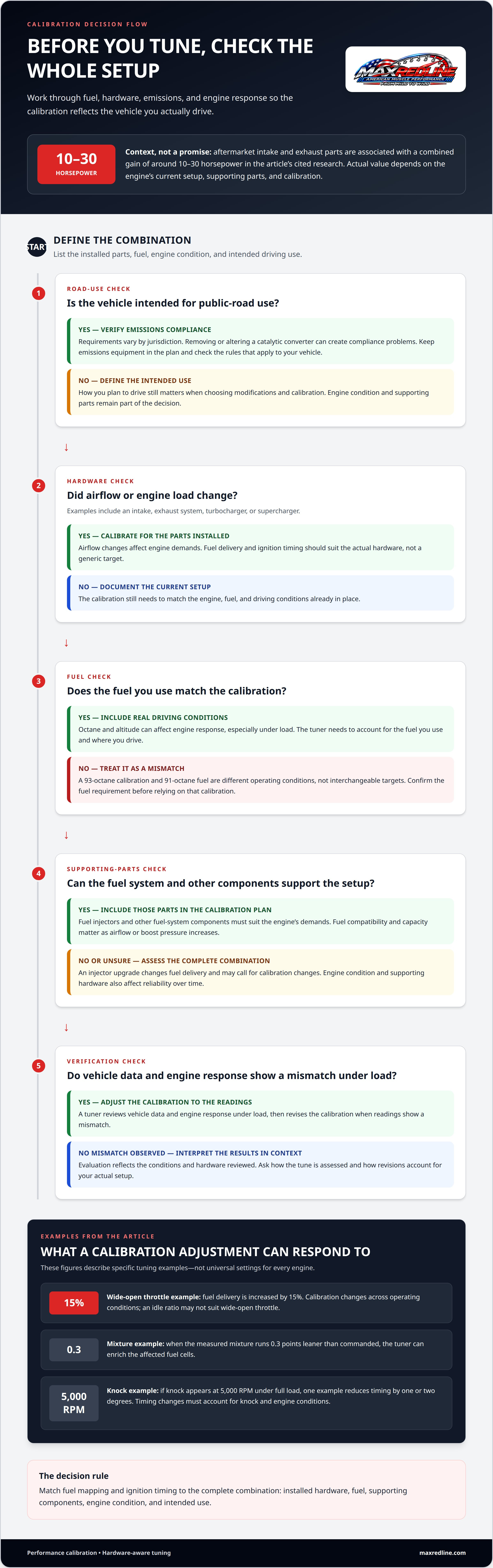
The air-fuel ratio describes the balance of air and fuel entering the cylinders, which affects combustion and cylinder pressure. A ratio suitable at idle may not suit wide-open throttle, so calibration changes across operating conditions. One tuning example increases fuel delivery by 15% at wide-open throttle. If measured mixture runs 0.3 points leaner than commanded, the tuner can enrich the affected fuel cells. That adjustment helps correct the mismatch without treating one ratio as right for every condition.
Fuel Octane and Altitude Effects
Octane and altitude affect how an engine responds to its calibration, especially under load. A tune developed at sea level on 93-octane fuel may behave differently at 5,000 feet on 91-octane fuel. The tuner must account for the fuel you use and the conditions where you drive. Ignition timing also matters: if knock appears at 5,000 RPM under full load, one example reduces timing by one or two degrees. Increasing timing without accounting for knock can raise cylinder pressure at the wrong point in combustion.
Fuel and Supporting Parts for a Tune
The required octane and supporting parts depend on the engine’s hardware and calibration. Use the fuel specified for the tune; a 93-octane calibration and 91-octane fuel represent different operating conditions, not interchangeable targets. Supporting components may include fuel injectors and other fuel-system parts sized for the engine’s demands. Their fuel compatibility and capacity matter as airflow or boost pressure increases. Installing an injector upgrade changes fuel delivery, so the calibration must account for it. Injector upgrades may call for calibration changes, depending on the setup. An aftermarket exhaust system or other airflow change also belongs in the overall setup, helping the tuner adjust fuel and timing to the parts in place.
Bolt-on hardware and supporting modifications
Bolt-on upgrades change how air enters, fuel burns, or exhaust leaves the engine. A cold air intake and performance exhaust affect airflow, while a supercharger forces more air into the engine. Each change affects engine demands, so supporting components and calibration must match the installed hardware and intended use.
Which upgrades provide the best horsepower gains for the money? There’s no single winner across every vehicle. The available research gives aftermarket intake and exhaust parts a combined gain of around 10 to 30 horsepower. The practical value depends on your engine’s current setup, the parts required to support the upgrade, and whether the calibration can account for those changes.
Forced induction increases demands on the complete setup. A turbocharger or supercharger compresses incoming air, increasing airflow and engine load. A supercharger upgrade therefore needs a plan for matching fuel delivery and calibration to the new hardware. Without accounting for those requirements, the engine may operate outside the intended setup.
Match supporting components to the parts they support. An intake or exhaust change alters airflow, so the calibration should reflect the installed parts. A fuel-system change affects delivery, while a supercharger adds forced air. The right combination depends on the engine configuration and specific upgrades, not a universal parts list. Keeping emissions equipment in place also matters for street use.
Power is only one goal. Suspension upgrades can include shocks, struts, and springs to improve handling and stability without adding engine output. Choose components based on how you use the car: a street setup may prioritize comfort and predictable response, while a performance-focused combination may emphasize control under load.
Before installing a bolt-on part, account for the supporting hardware and calibration it may require. An intake, exhaust system, or supercharger changes a different part of the engine’s operating setup. Treat each upgrade as part of the complete combination, including emissions equipment, engine response, and intended use.
Tuning aftermarket intake and exhaust parts
An aftermarket intake changes how air enters the engine, while exhaust parts affect how gases leave. The ECU calibration should account for both changes as one operating combination. A cold air intake, for example, can alter airflow readings; headers or a cat-back exhaust can change exhaust flow. Matching calibration to both parts is central to performance tuning for modified cars.
Before calibration, the tuner needs the exact intake and exhaust configuration. Intake design, sensor placement, exhaust layout, and other engine modifications affect which parameters need attention. After installation, the tuner evaluates engine data under changing loads and adjusts fuel delivery and ignition timing to suit the hardware. This helps avoid a mismatch between commanded engine operation and the parts actually fitted.
One generic file cannot account for every combination. A vehicle with an intake and cat-back exhaust differs from one with long-tube headers or additional engine changes. The tuner considers the current setup, fuel, and intended driving conditions. If parts change after calibration, the previous settings may no longer match. Recalibration can bring engine control in line with the updated configuration, an important part of performance tuning for modified cars.
Expect the process to focus on measured vehicle behavior, not just peak horsepower. The tuner reviews data across the operating range and adjusts settings when engine response shows a mismatch. A single number cannot describe how an intake and exhaust combination performs under different loads. The practical goal is a calibration suited to those parts and the way you drive.
Cold air intakes are generally an easy do-it-yourself installation and are available for a variety of makes and models. Standard catalytic converters can restrict exhaust flow and reduce engine power.
Max Redline: Tuning services
Max Redline provides tuning services for supported gasoline-powered cars and trucks, matching calibration to intake, exhaust, or engine changes. In-shop dyno tuning evaluates wheel horsepower and torque while reviewing vehicle data. Remote tuning uses datalogs and revisions to refine calibration around your vehicle’s setup.
Bring the exact modification list and fuel information into the tuning process. Details such as an aftermarket intake, exhaust system, or Hemi Cam Kit help define the hardware the calibration must support. Choose in-shop tuning when dyno evaluation fits your needs, or remote tuning when your supported vehicle and setup suit datalog-based revisions.
Contact Max Redline to discuss tuning for your modified vehicle.
Plan the Next Build Around the Whole Vehicle
Before choosing your next upgrade, decide what you want the vehicle to do: daily driving, towing, or track use. That goal helps keep future parts and calibration aligned, rather than turning the build into a series of disconnected changes. A clear plan also gives you a useful reference as the setup evolves.
Your performance tuning for modified cars plan should account for both current hardware and the direction of the build. Max Redline provides tuning services alongside exhaust systems and Hemi Cam Kits, offering relevant options as you plan the next stage. Its tuning services can help match those choices to your vehicle’s configuration.
Set the direction, then discuss the combination that fits your car. Contact Max Redline about your car and take the next step with a build plan that works toward your goals.
Frequently Asked Questions
What Is a Tune?
A tune is a software calibration that changes how the engine control unit manages engine operation. It can adjust fuel mapping, ignition timing, boost pressure, rev limits, and throttle response. A stock calibration is built around the factory configuration; a modified vehicle may need settings matched to its installed parts and intended fuel. The goal is coordinated engine control, not simply a higher power target.
What are the best performance upgrades for a modified car?
The right upgrade depends on your vehicle’s needs and how you drive. If airflow is restricted, an intake or exhaust upgrade may fit the plan; a supercharger represents a different level of engine change and requires supporting components. Start with the existing configuration and your goal, then select compatible parts rather than buying upgrades as unrelated pieces.
How does a professional tune an engine after performance parts are installed?
A professional bases calibration on the parts installed, engine configuration, and fuel you plan to use. An intake and exhaust combination, for example, differs from a setup that also includes a camshaft. The tuner evaluates how the engine operates with that specific combination and adjusts the calibration accordingly. If the hardware changes later, the calibration may need to change too.
What are the risks of tuning a modified car for street use?
Street use adds real-world fuel, traffic, and emissions considerations to calibration. A tune intended for different fuel or hardware may not suit your daily-driving setup, and poor calibration can increase engine stress. Changes to emissions equipment can also affect compliance with public-road rules. Keep the intended street configuration and fuel requirements central to the build.